Why central AC maintenance is different
With a wall split, everything is in front of you. With central and concealed systems, most of the equipment is hidden above the gypsum: the indoor unit, the drain pan and the ducts that carry cool air to each room. Because nobody sees it, problems grow quietly until they show up as a warm bedroom, a stain on the ceiling or dust puffing out of the vents.
In Riyadh villas, ducts often run through very hot spaces, such as the ceiling void right under the roof. If the insulation is damaged or a joint has come loose, the air heats up on the way or leaks into the ceiling before it reaches the room.
What we check on a central or ducted system
The units
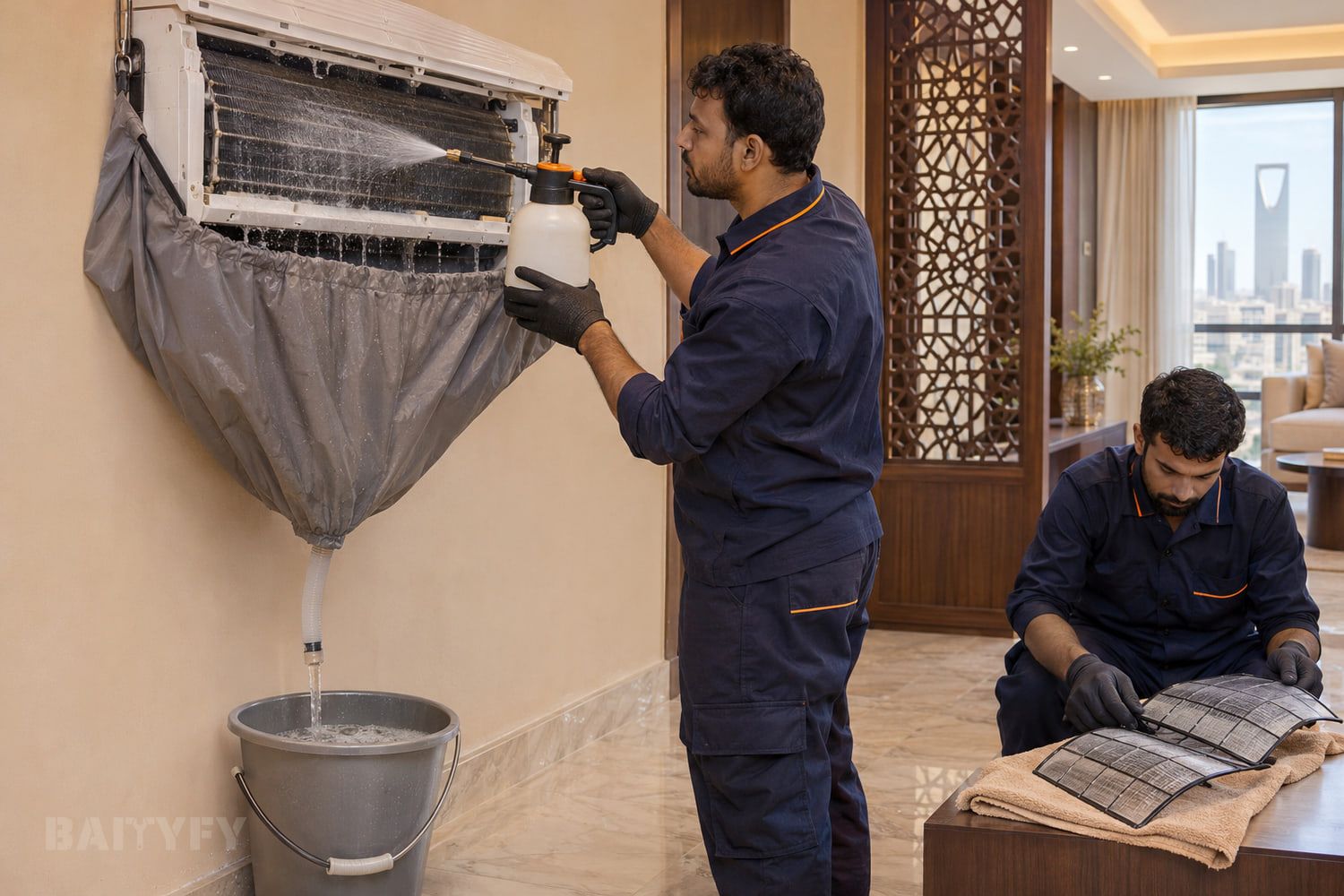
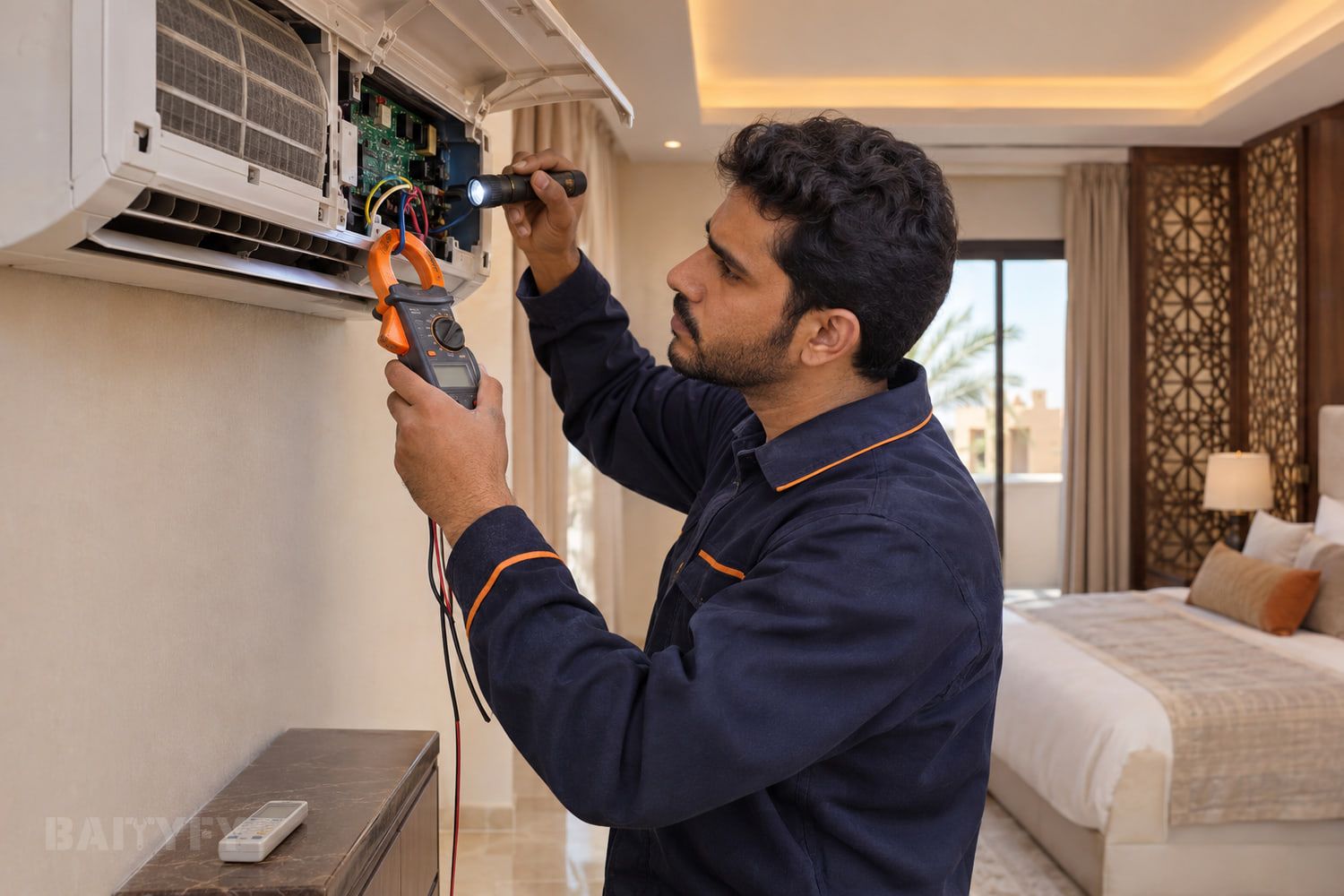
Indoor and outdoor units get the same checks as any AC: refrigerant pressure, current, capacitors and fans. On the indoor unit we focus on the filter, coil and drain pan, the most common source of water damage to gypsum ceilings.
Ducts and airflow
We inspect flexible and metal duct connections for sections that have come apart, been crushed or lost their insulation, and measure airflow at the vents to locate the problem. Then we adjust dampers and vents so the air is shared evenly between rooms.
The thermostat
A thermostat in the wrong spot, on a sunny wall or near the kitchen, gives false readings and makes the whole system over- or under-cool. We check its settings and location and suggest alternatives if needed.
Duct cleaning: when it’s really needed
Not every system needs its ducts cleaned every year. It becomes worthwhile when:
- Visible dust blows out of the vents when the AC starts.
- Filters were neglected for a long time and dust got past them.
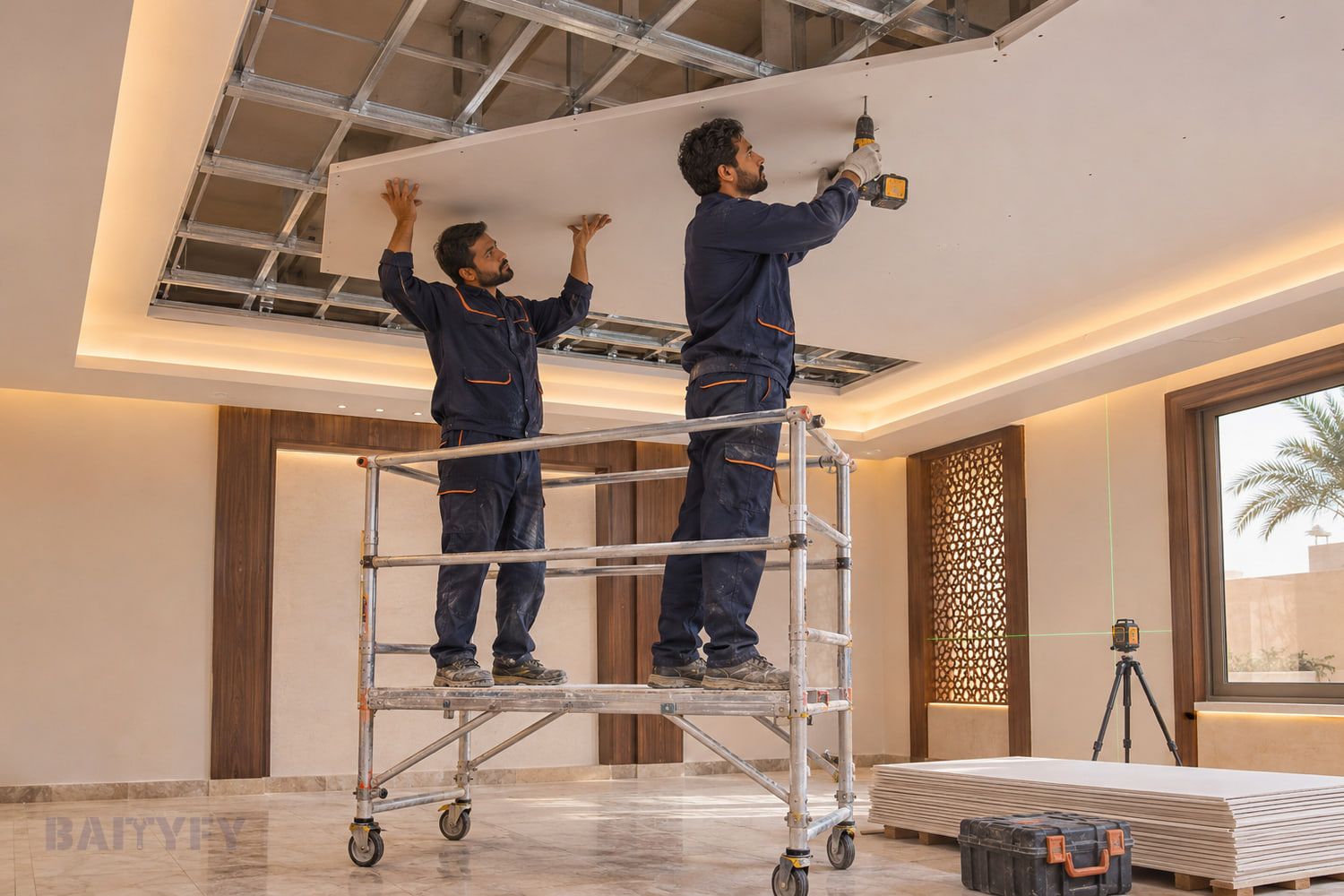
- The house has just had renovation, gypsum or painting work.
- Someone at home has allergies or asthma.
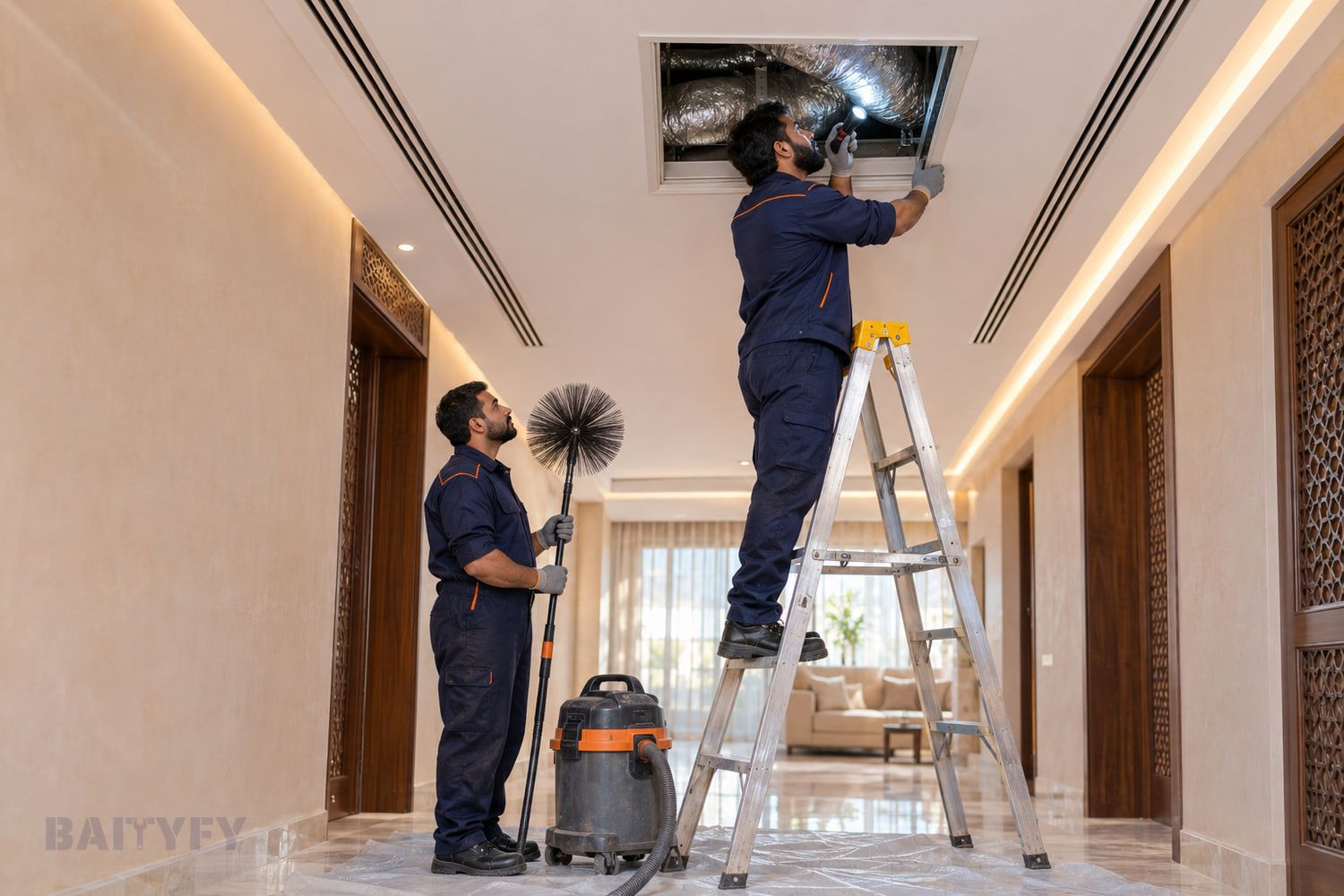
We clean ducts and vents with tools suited to the duct type, and tell you if a section is too damaged to clean and should be replaced.
A tip for villa owners
Make sure every concealed unit has a properly sized, easy-to-find access hatch. Plenty of small faults grow into bigger jobs simply because the unit is hard to reach, so routine servicing gets skipped year after year.