Home wiring: the work nobody sees that decides everything
Once the paint and gypsum are done, nobody sees the cables again. Yet your wiring decides whether you live with tripping breakers, extension leads and warm sockets, or without them. Whether you need first-fix wiring for a new build or rewiring for an older home in Riyadh, we treat it as the foundation of the house.
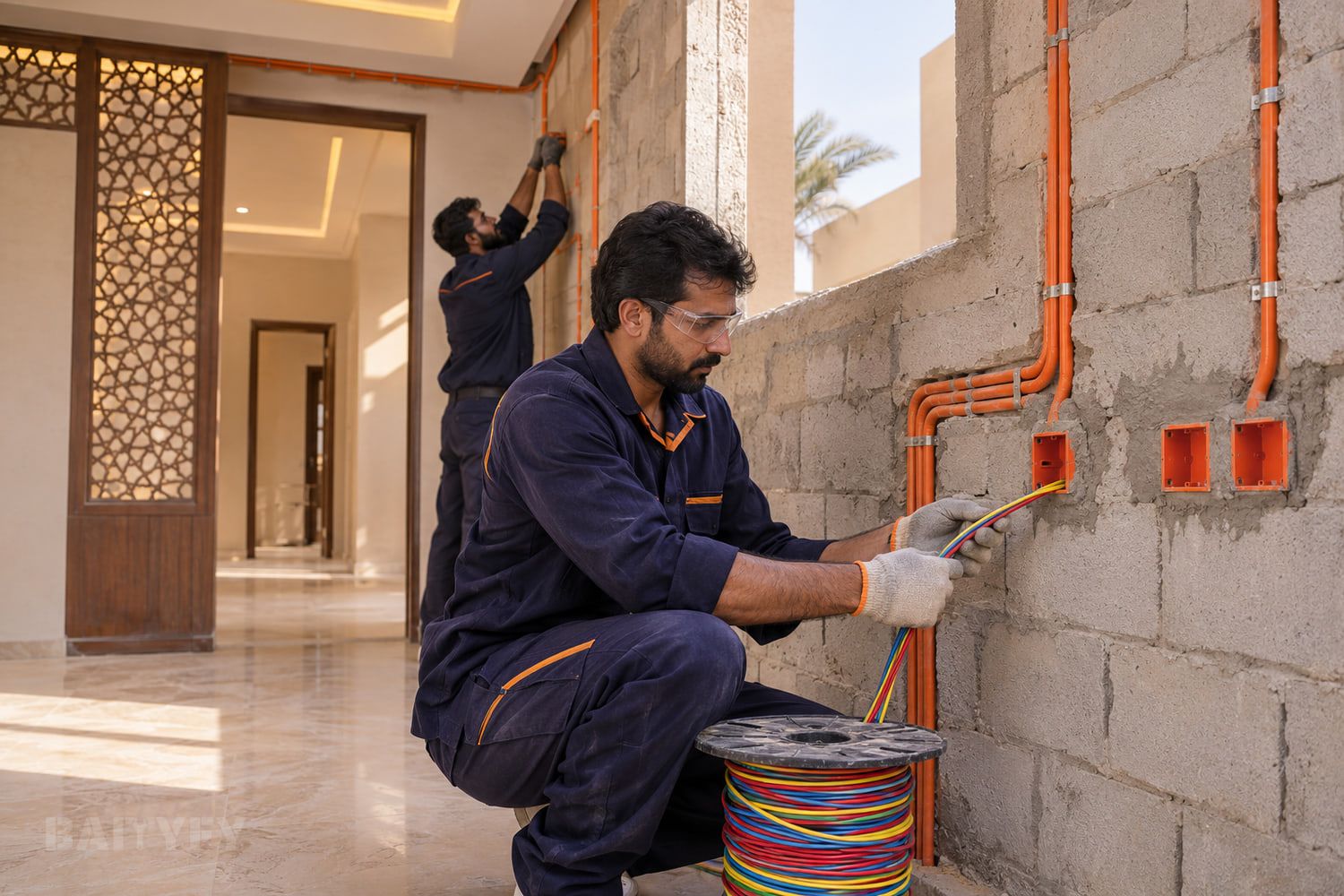
Wiring new homes and annexes
Planning before cable
Before anything is installed, we sit down with you over the drawings. Where does the bed go? The TV? How many ACs on each floor? Is there an outdoor kitchen or laundry room? That tells us how many circuits you need and where sockets, switches and light points should be. We then spread the load across the panel so ACs don’t pile up on one circuit.
Dedicated circuits for heavy loads
In Riyadh, air conditioning is the biggest load in the house. We give ACs their own circuits, along with water heaters, the oven and the dishwasher, using cable sizes that can handle long summer running without overheating.
Testing before the wall is closed
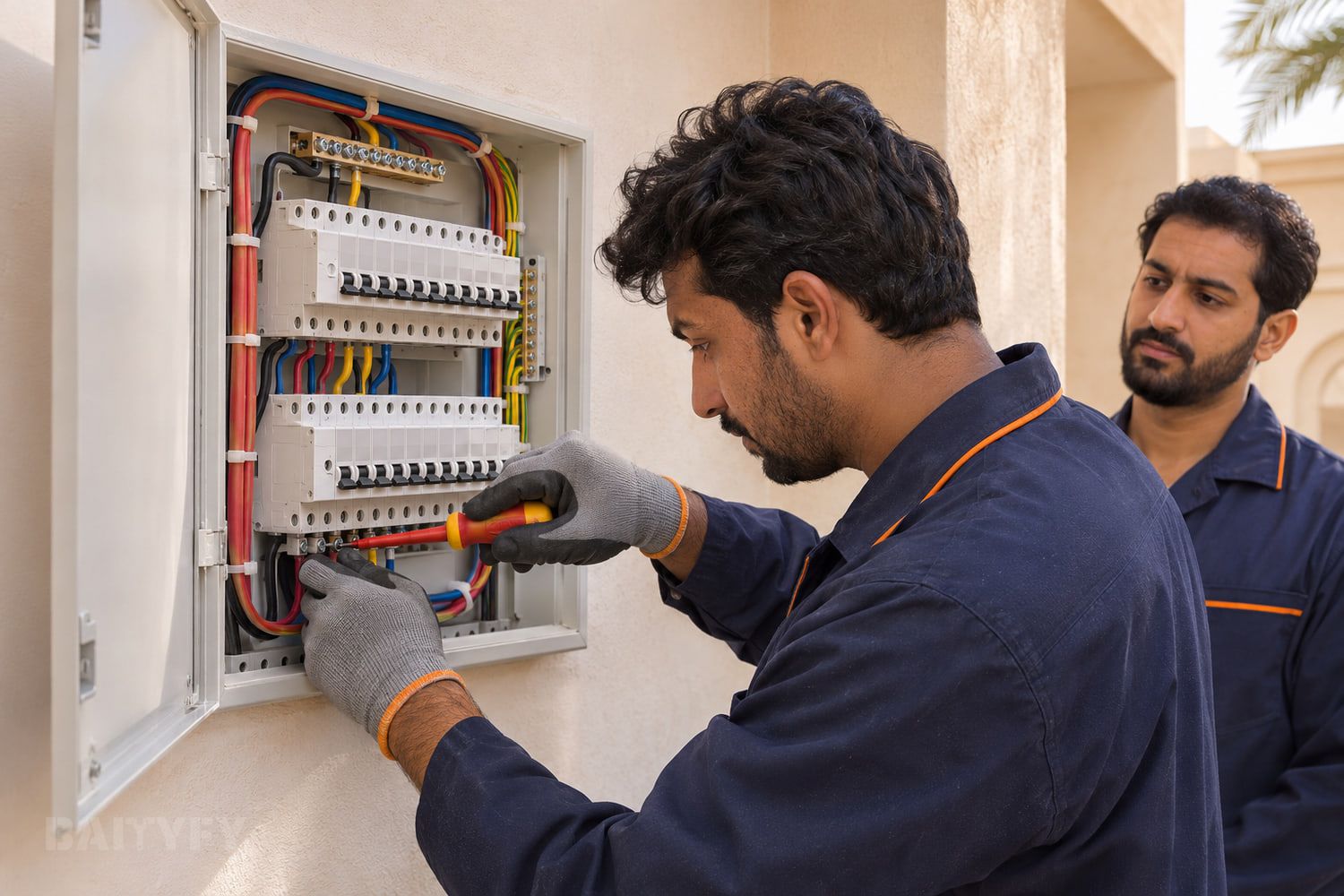
After the cables are pulled and before plaster or gypsum, we test insulation, continuity and earthing. Anything that needs correcting is easy to fix at this stage, rather than after the house is finished.
Rewiring older homes
Many homes in Riyadh’s older neighbourhoods were wired for a fraction of the appliances they run today. We find cables with heat-cracked insulation, circuits with no earth, and small panels whose breakers don’t match the load. Signs your wiring needs a review:
- Frequent trips even though you haven’t added appliances.
- Two-pin sockets with no earth.
- Warmth or a smell at sockets during peak hours.
- Relying on extension leads in every room.
The electrician checks whether you need a full rewire or just a few circuits updated, and gives you both options with costs.
Tips before you start
- Think five years ahead: an extra AC, an EV charger, a bigger kitchen.
- Ask for more sockets than you need now. Adding them at first fix costs far less than later.
- If you’re considering a smart home, tell us at the start so we can prepare suitable cables and boxes.
- Photograph the walls before plastering. It helps when you want to drill or hang something later.
Safety
Wiring has to be done by a licensed electrician, because a hidden mistake inside a wall can cause a short or a fire years later. Please don’t run cables yourself or rely on temporary leads under rugs or behind furniture.