What actually causes a blocked drain
Every blockage has a story, and knowing it is the difference between a fix that lasts and one that’s back next week. These are the causes we see most in Riyadh homes:
- Kitchen grease. Oil and ghee go down liquid and set inside the pipe, then bind with rice and food scraps into a hard plug.
- Hair and soap. In shower and bathroom floor drains, hair tangles and traps soap until the opening closes.
- Wet wipes and nappies. Some say “flushable”, but they don’t break down like toilet paper and they block toilet lines.
- Sand and dust. They wash in through courtyard and roof drains and when floors are mopped, then settle in horizontal pipe runs.
- Mineral scale. In older pipes, deposits narrow the bore until almost anything can block it.
How we clear blocked drains
Find where the blockage is
First question: is it one fixture or several? A single slow sink is usually a trap or branch-line problem. If several points are affected, or water comes back up a ground-floor drain, the problem is in the main line or an inspection chamber.
Use the right tool
- Trap removal and cleaning for basins and kitchen sinks.
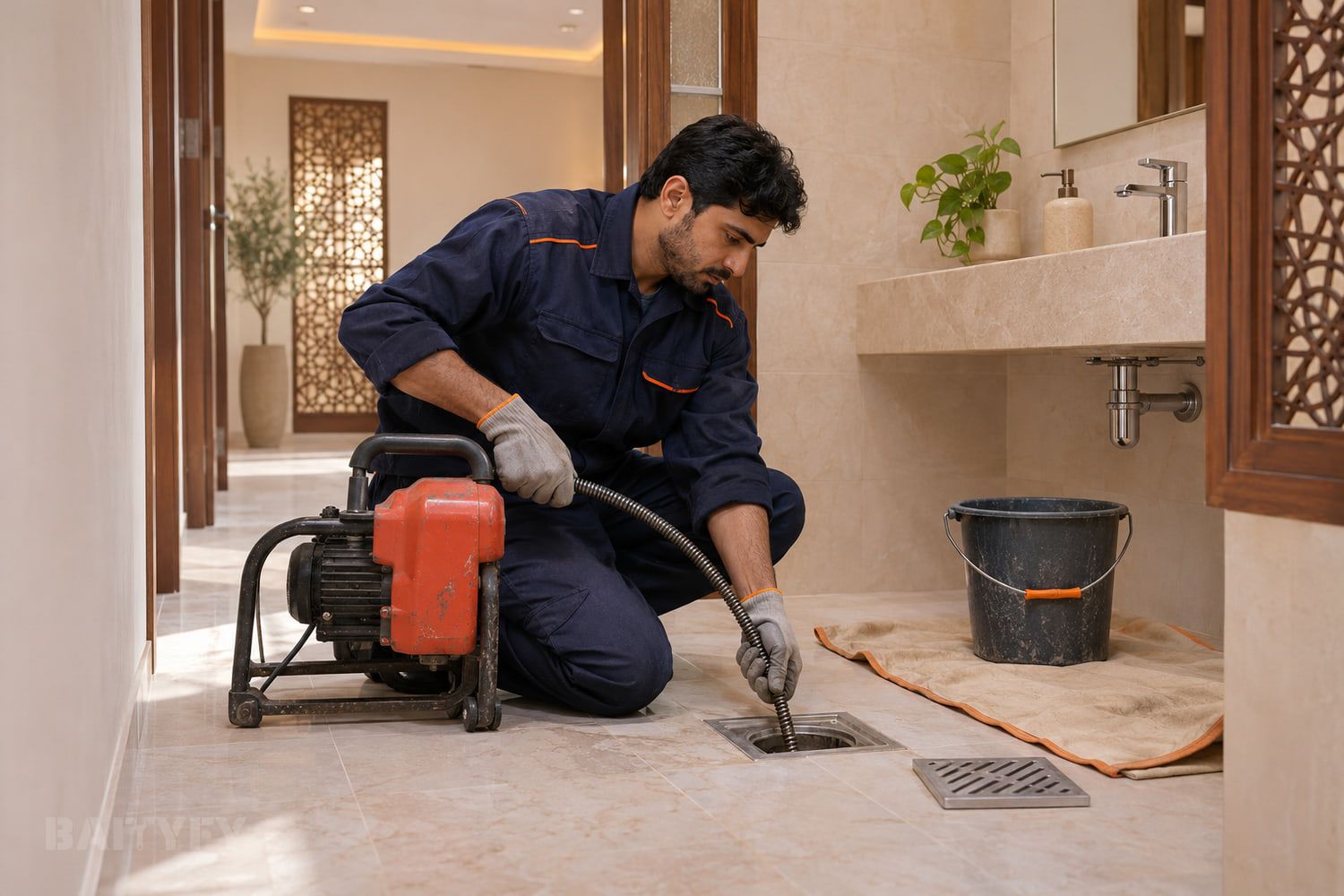
- A hand drain snake for branch lines and nearby floor drains.
- An electric drain machine for distant, stubborn blockages in main lines.
- Water jetting for lines coated in grease or deposits, depending on the pipe type and condition.
Test and explain
After clearing, we run water through every affected point to confirm normal flow. Then we tell you plainly what caused it, and whether the line itself has a problem, like a poor fall or a crack, that you should know about.
When a blocked drain is urgent
When sewage is backing up inside the house, the only toilet is blocked, or a strong smell is spreading. In those cases, stop using water as much as you can and message us on WhatsApp so we can prioritise the job.
Simple habits that prevent blockages
- Keep oil and fat out of the kitchen sink.
- Fit a hair catcher on the shower drain and empty it every few days.
- Never flush wet wipes or nappies.
- Run hot water through the kitchen sink once a week, and lift the inspection chamber cover now and then to check it’s flowing.