Why would an AC need a gas refill?
Refrigerant is what carries heat out of your room and dumps it outside. It circulates in a sealed loop of copper pipe, so it isn’t used up the way fuel is in a car. If the level is low, there is a leak somewhere. That’s the single most useful thing to know about AC gas: topping up without fixing the leak is money that literally escapes into the air.
Leaks are more common in Riyadh for a few clear reasons. Roof-mounted pipes expand and contract with the daily heat, units get taken down and reinstalled every time a family moves, and copper coils corrode over the years.
Signs your AC is low on refrigerant
- Cooling is good at first, then fades gradually over weeks.
- Frost forms on the thin copper pipe or the indoor coil.
- The outdoor unit never stops, yet the room never really cools.
- Oily residue around joints, since oil escapes along with the gas.
How we do an AC gas refill properly
1. Measure first
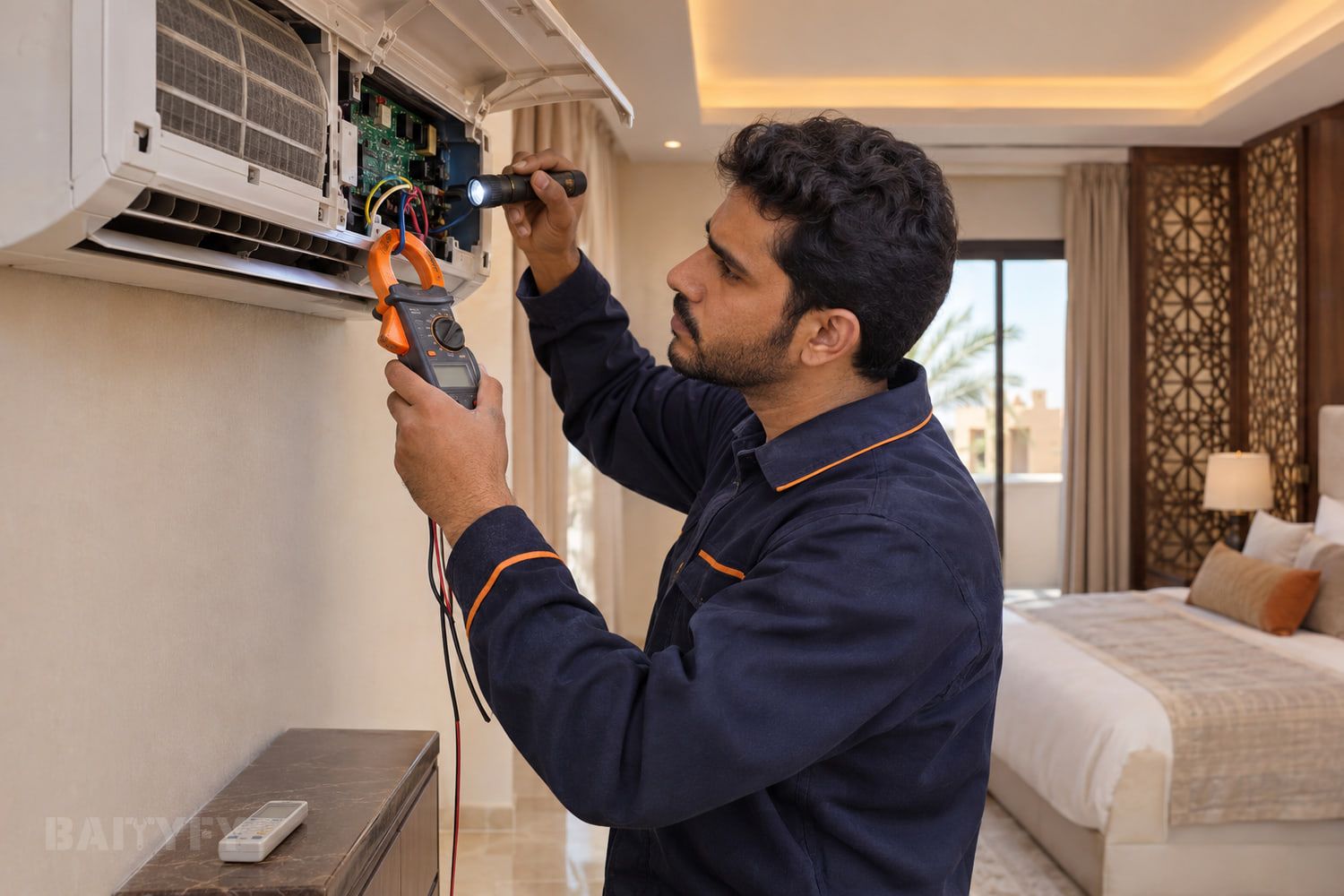
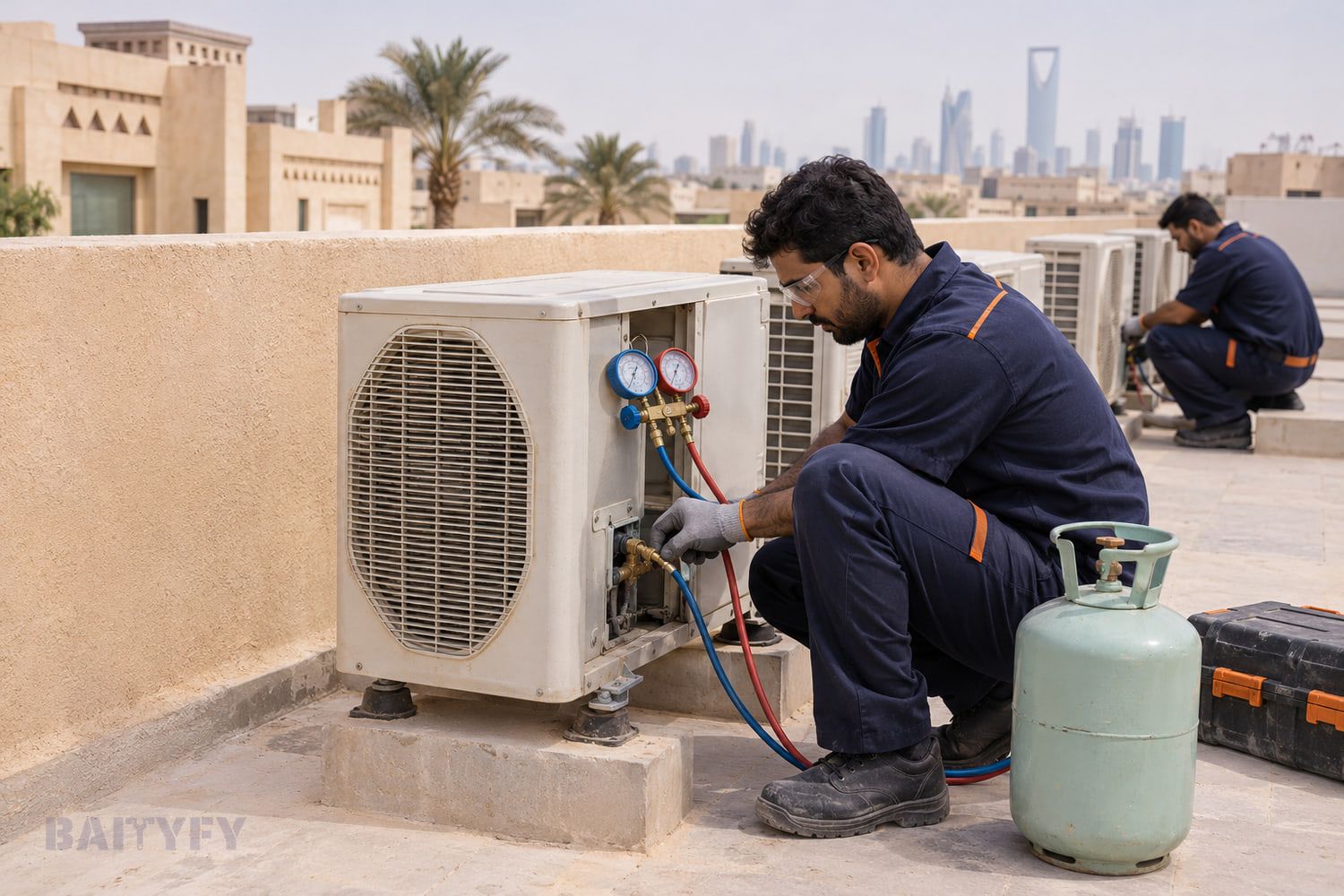
The technician connects gauges and compares the pressure with the unit’s specifications for its refrigerant type, along with temperature and current readings. If the pressure is normal, we look for the real cause of the weak cooling rather than adding gas that isn’t needed.
2. Find the leak
We start with the likely spots: flare joints on both units, then coils and pipe runs. We use leak-detection foam and suitable test tools, and sometimes a nitrogen pressure test for small leaks that are hard to spot.
3. Repair and test
Depending on where it is, that means re-making a flare joint, brazing the copper or replacing a section of pipe. Then we test that the system holds pressure, and vacuum out air and moisture if the circuit has been opened.
4. Charge the right amount
We charge the refrigerant listed on your unit’s label, in the amount it needs. Too much is as harmful to the compressor as too little. We finish by running the AC and checking the air temperature with you.
A word on safety
Refrigerant is stored under pressure and can cause cold burns if it touches skin or eyes. Please don’t loosen fittings or try to recharge the unit yourself, and never use unlabelled gas cylinders. If you hear strong hissing from a pipe or notice an unusual smell, switch the AC off, ventilate the room and get in touch.