Why water heaters wear out fast in Riyadh
The main culprit is hard water. Riyadh’s water carries minerals that settle out as it heats, forming a white crust on the element and a layer at the bottom of the tank. That crust insulates the element from the water, so it runs hotter and burns out sooner, and you get less hot water from the same tank. The popping or rumbling some heaters make is water boiling under that scale.
The second is where heaters get installed. Many sit above gypsum ceilings, on the roof or in tight corners that are hard to reach, so servicing gets skipped until the heater stops completely.
What water heater repair involves
Electrics first
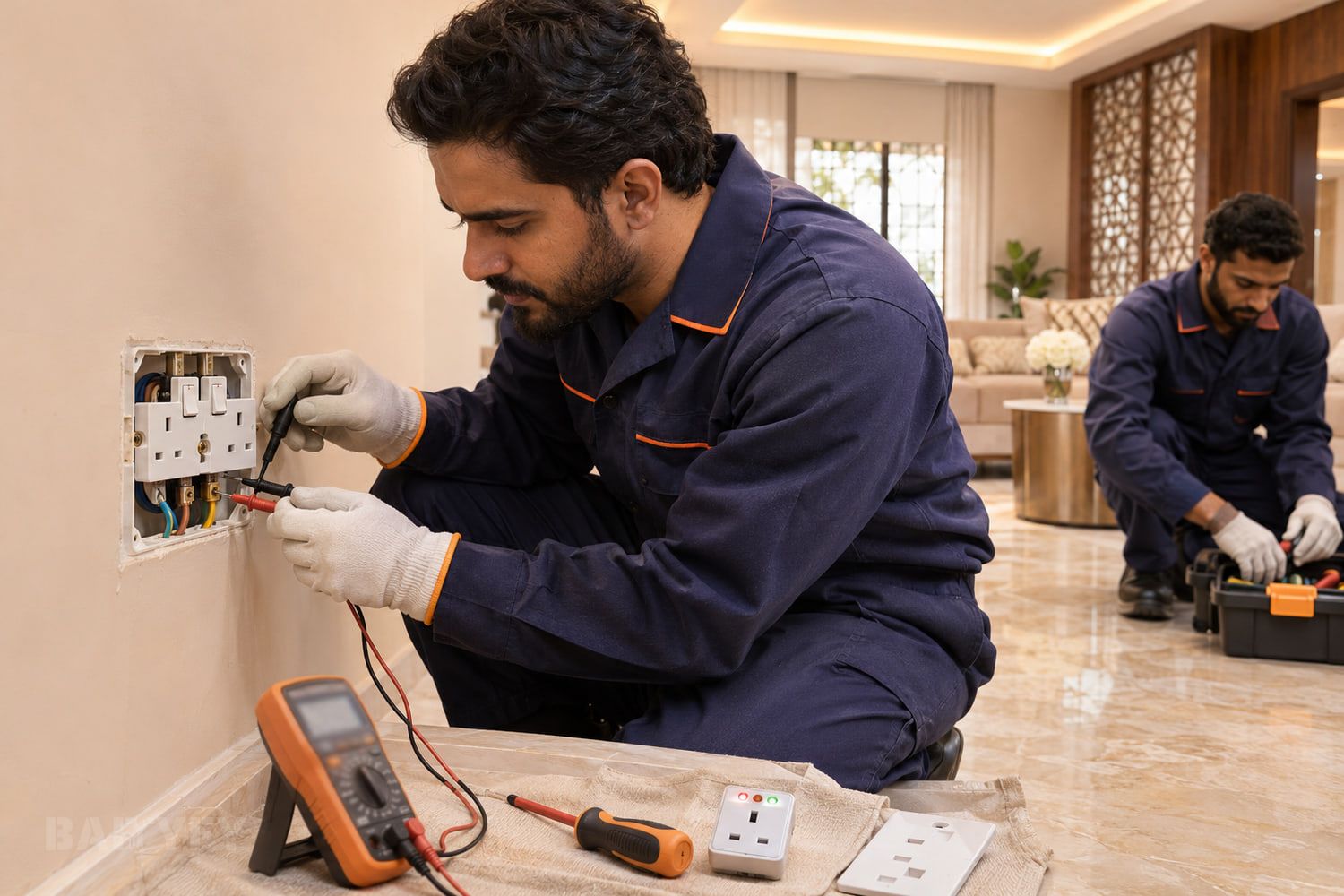
A water heater is an electrical appliance in direct contact with water, so safety comes first. We switch off the breaker, check the earthing, the connection and the cable condition, then test the element and thermostat to find the faulty part.
Element and thermostat
A burnt element is replaced with one of the same rating. The thermostat is tested and set to a sensible temperature. Very high settings speed up scaling and raise the risk of scalds, especially with children at home.
Descaling and the anode rod
We drain the tank, flush out as much of the settled scale as we can, and check the anode rod, which protects the tank body from rust. If it’s used up we replace it, which costs far less than a new heater.
Safety valve
We make sure the safety valve works and its discharge pipe drains somewhere sensible. It’s the last line of defence against excess pressure, and we never cut corners on it.
Water heater installation
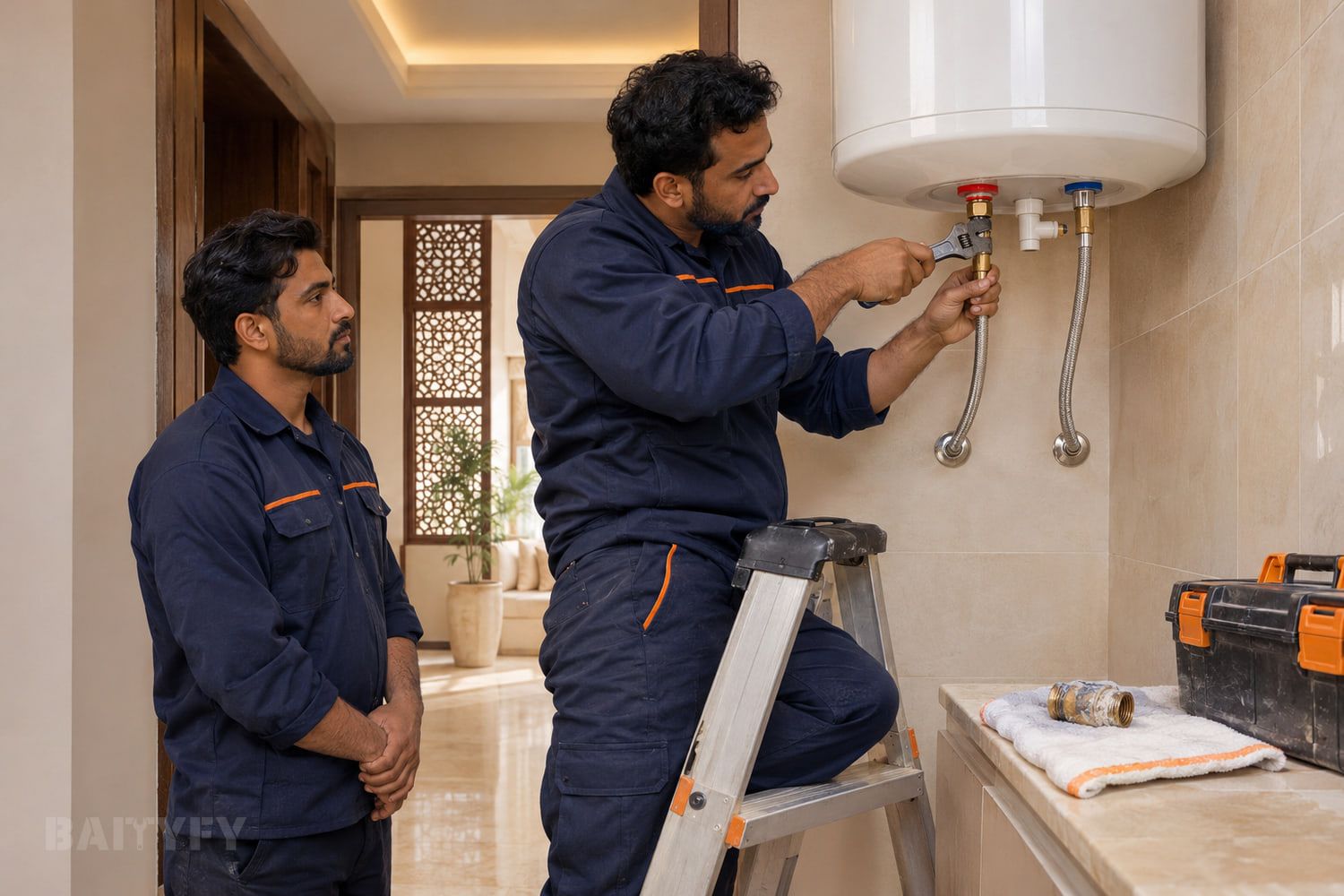
For a new heater we size the tank to the number of people using the bathroom, mount it on a wall that can take its full weight, fit new isolation valves on the inlet and outlet plus a sound safety valve, and connect it to a suitably rated breaker. We fill the tank and check every joint before switching on the power, because running a heater empty burns the element out instantly.
Important safety notes
- If you feel a tingle from a tap or the water, switch off the heater’s breaker straight away and stop using that bathroom until it’s checked.
- Never block or remove the safety valve, even if it drips.
- After draining a heater, don’t switch it back on until it’s completely full of water.