Split AC installation: the details that matter
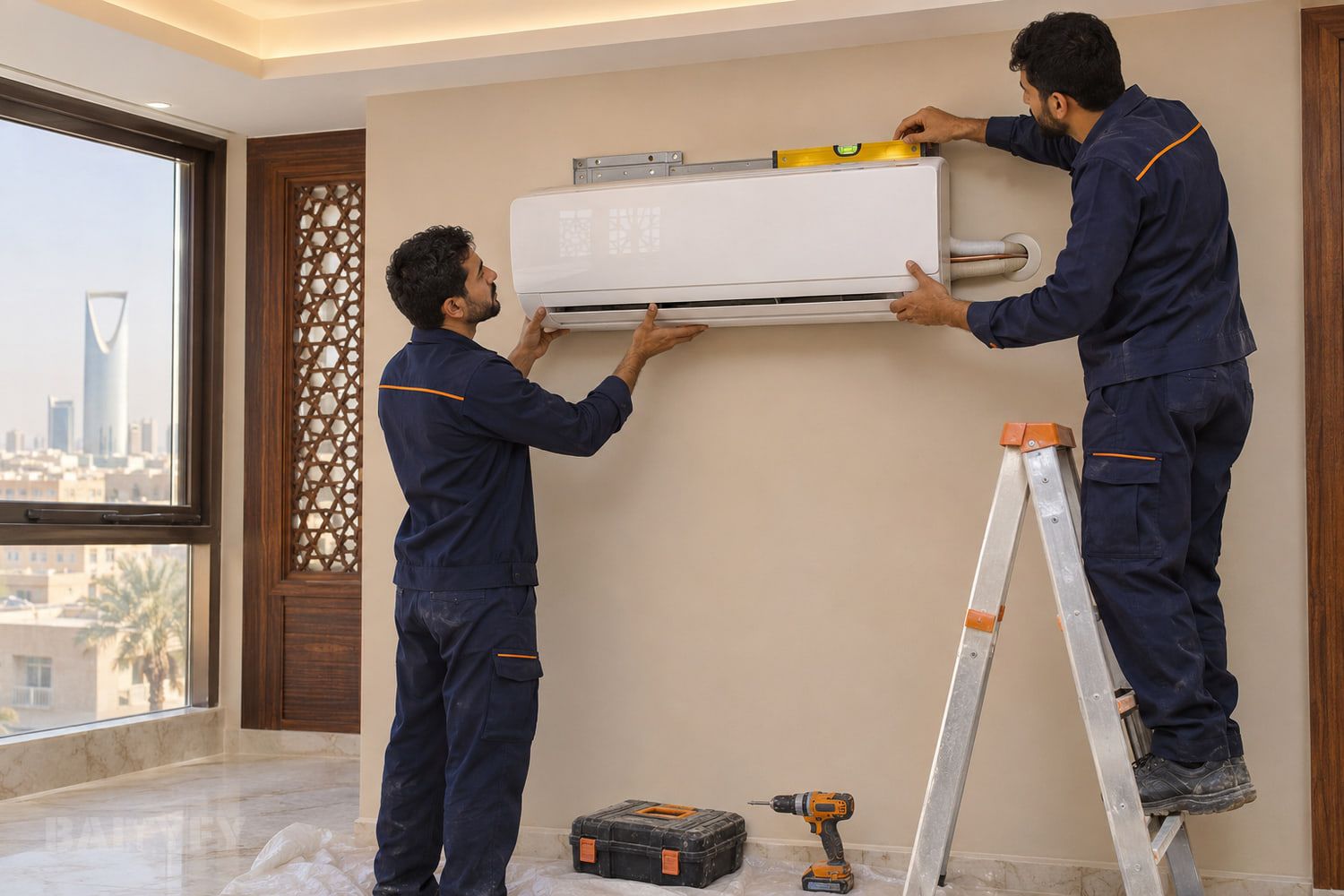
Two identical ACs can perform completely differently, and the difference is usually the installation. A rushed job leads to a refrigerant leak a few months later, water running down the wall, or an outdoor unit that bakes in the sun and cuts out every afternoon. We treat AC installation as work that needs planning, not just hanging a unit on a wall.
How we install your AC
Choosing the position
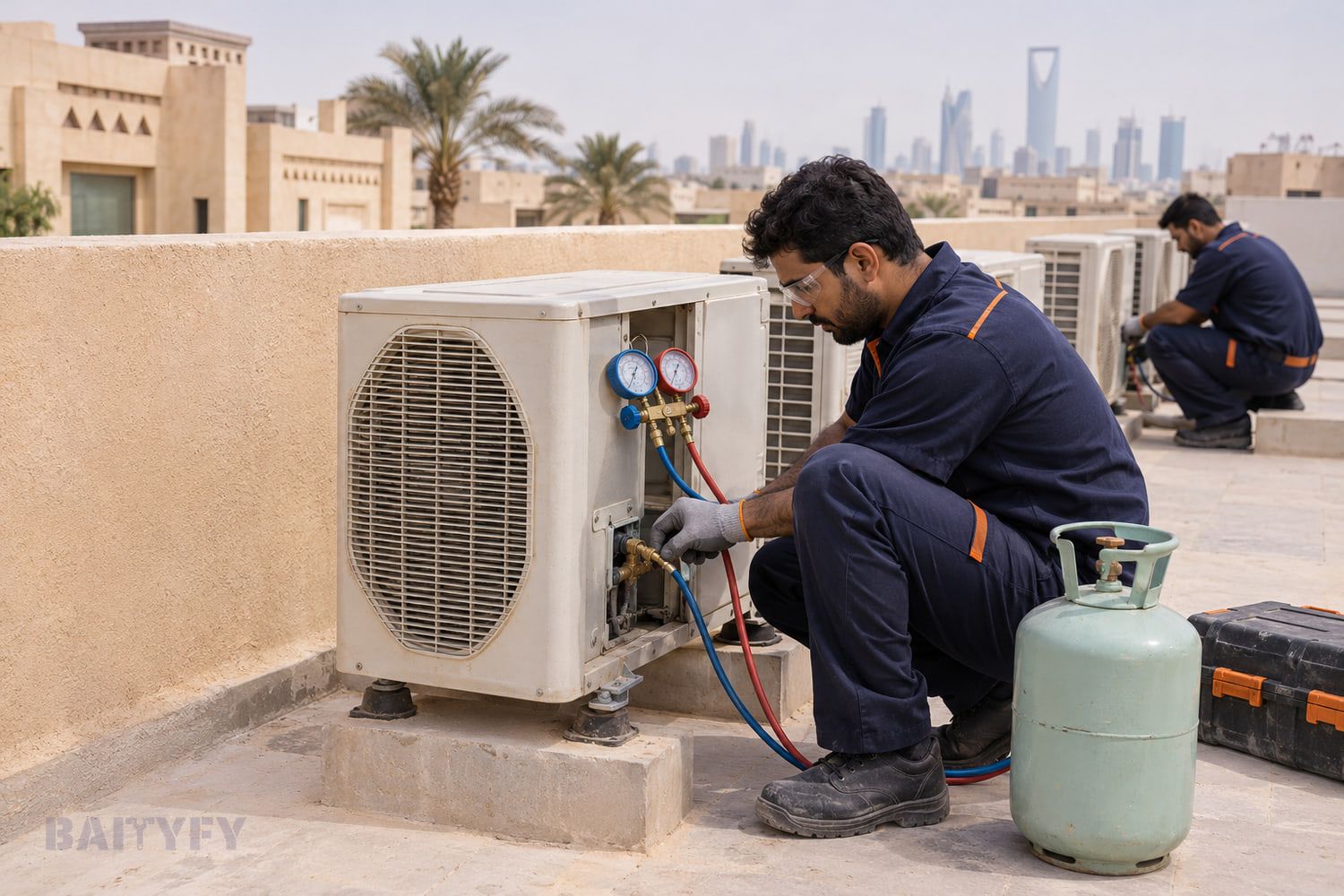
We start by looking at the room: where the air will spread best, the shortest route for the pipes, and where the drain can go. For the outdoor unit we look for good airflow, as little direct sun as possible, and safe access for future servicing. In apartments, we check roof or façade access with the building first.
Pipework and insulation
Copper pipes are sized to what the unit specifies, and flare joints are made with proper tools so they seal. In Riyadh, insulation is not a detail. An exposed pipe on a scorching roof loses part of its cooling before it ever reaches the room, and cheap insulation crumbles in the sun within a couple of summers.
The drain
The drain line needs a steady downward fall with no high spots, and it has to end somewhere that won’t stain the wall or bother the neighbours. This one small detail is behind most post-installation leak complaints.
Vacuum and start-up
Before releasing the refrigerant we vacuum the pipes to remove air and moisture, which would otherwise harm the compressor over time. Then we check every joint, start the unit, measure the air temperature with you, and show you the remote modes and how to clean the filter.
Moving home? AC removal and reinstallation
Moving day is when a lot of ACs get damaged. We pump the refrigerant into the outdoor unit before disconnecting, cap the pipe ends to keep dust out, and wrap the units for transport. At the new home we follow the same steps as a fresh install: a considered position, new flare joints, vacuum, then start-up.
Before you buy a new AC
Ask us about the right capacity for the room’s size and orientation. West-facing rooms and roof annexes take far more heat than an inner room of the same size, and an undersized unit in a hot room will run non-stop and wear out early.