Most renovation problems don’t start during the work. They start before it: a budget with no buffer, tiles chosen before anyone checked the pipes underneath, or a contractor who started without a clear scope. The result is a project that drags on, a bill that keeps growing, and a lot of stress.
The good news is that simple planning avoids most of this. Here are the steps we’d suggest to anyone thinking about renovating a home in Riyadh.
1. Decide why you’re renovating, and what comes first
Before the mood boards and catalogues, ask yourself what actually bothers you about your home:
- A kitchen that’s too small for the family?
- Old bathrooms with damp and leaks?
- Cracked floors or dated tiles?
- A property you want to rent out or sell, and need to freshen up?
Write the list and sort it: must-haves, nice-to-haves, and things that can wait. That order will guide you when you’re deciding where the budget goes.
2. Set a realistic budget, with a buffer
Pick a figure you’re comfortable with, and keep part of it aside for surprises. In older homes especially, once walls and floors are opened up, there’s often something nobody expected: a corroded pipe, old wiring, damp inside a wall.
A buffer doesn’t mean you’ll spend it. It means you won’t have to stop halfway if something turns up.
3. Check what’s behind the finishes
This is the most important step, and the one most often skipped. Tiles, paint and gypsum are layers over something more important: your wiring, plumbing and insulation.
Before choosing colours, make sure of the following:
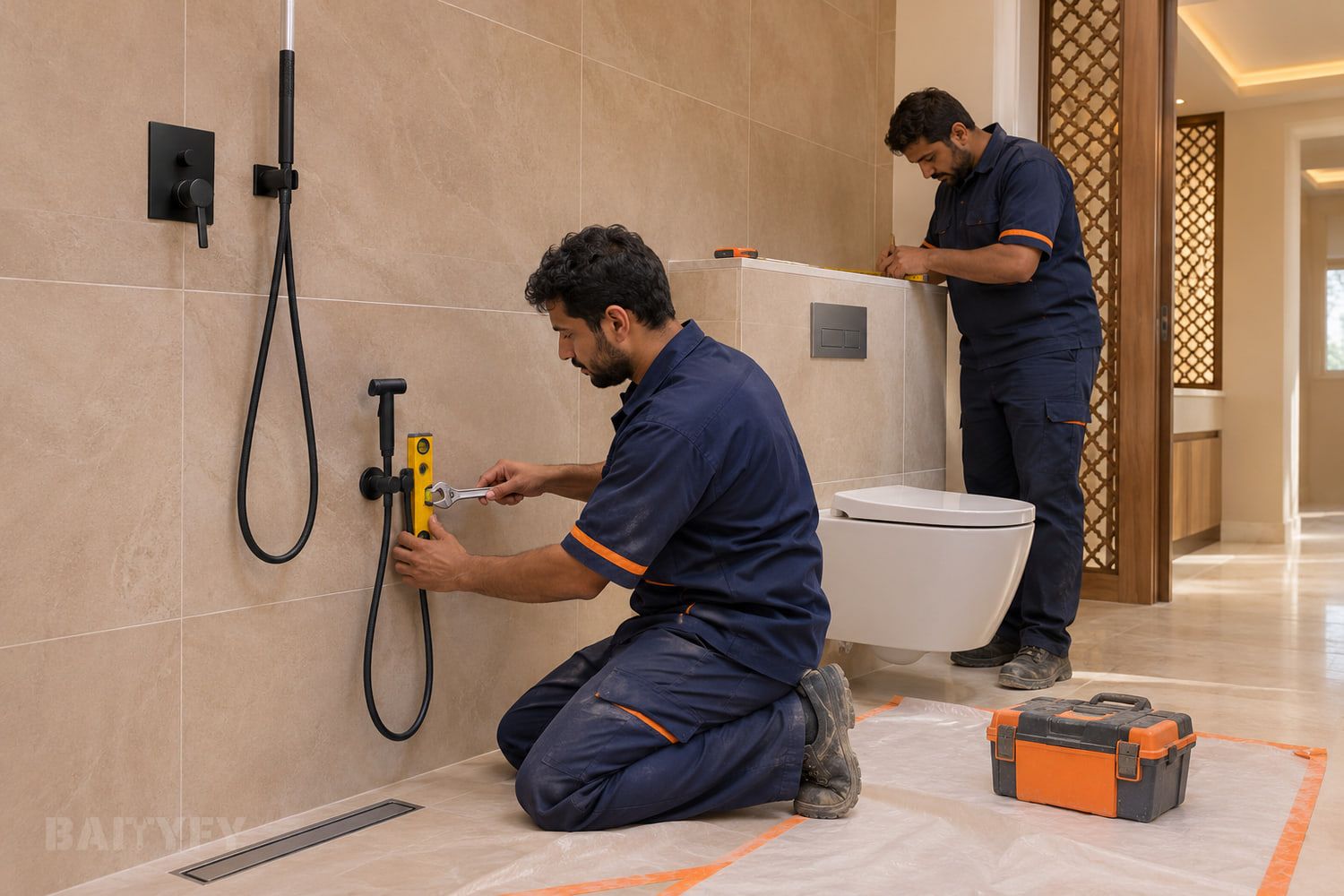
- Plumbing. Are there leaks or ageing pipes? Leak detection before you renovate saves you from breaking new finishes later.
- Electrics. Can the wiring handle the new appliances you’re adding to the kitchen? Does the panel have enough breakers?
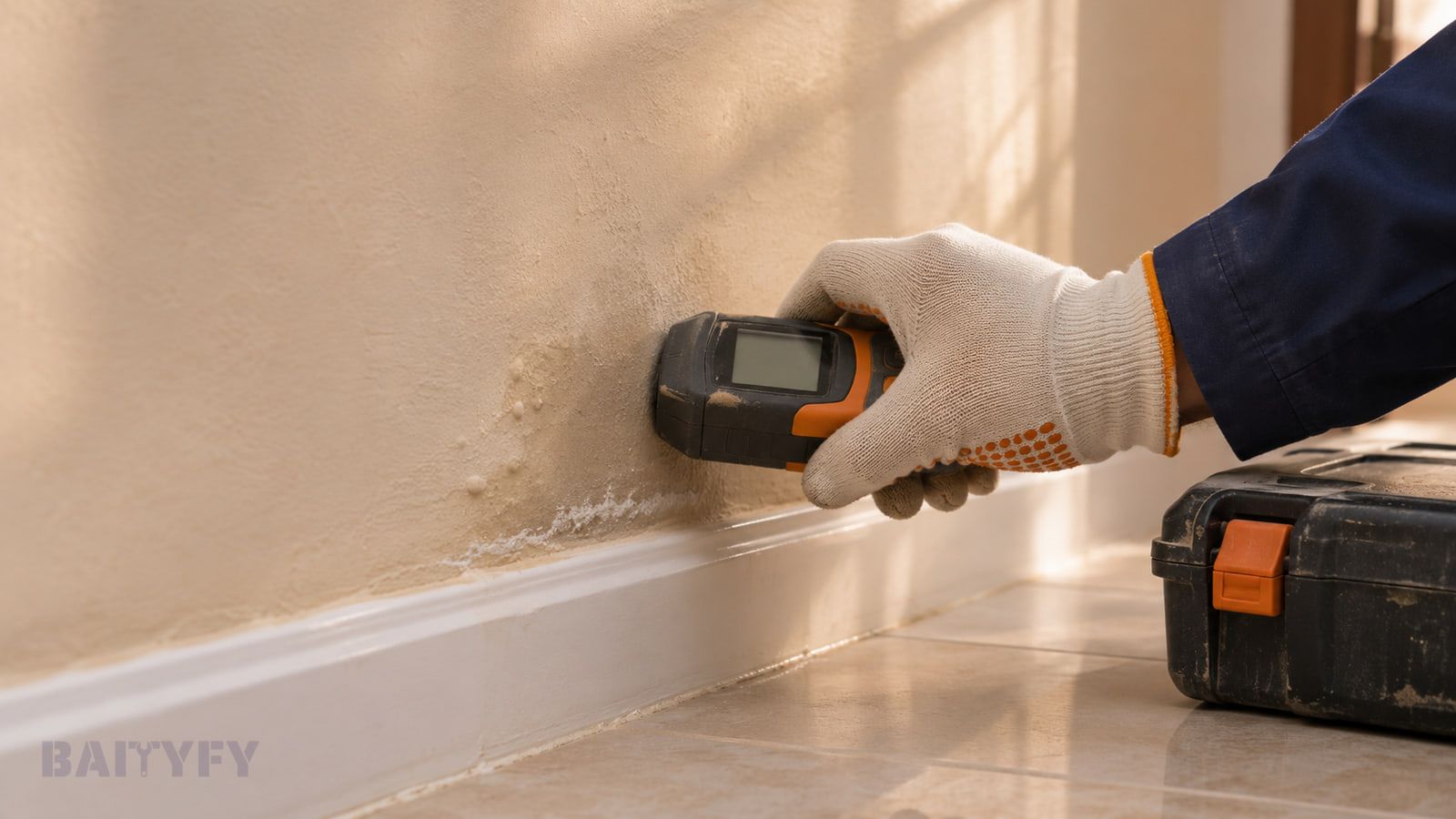
- Damp. Any stains or peeling on the walls? Find the source and deal with it first.
4. Do the work in the right order
The order of stages makes a big difference to quality and time. The usual sequence:
- Strip-out. Remove whatever is being replaced.
- First fix. New or modified plumbing and electrical runs.
- Walls and ceilings. Plastering, gypsum board and dropped ceilings.
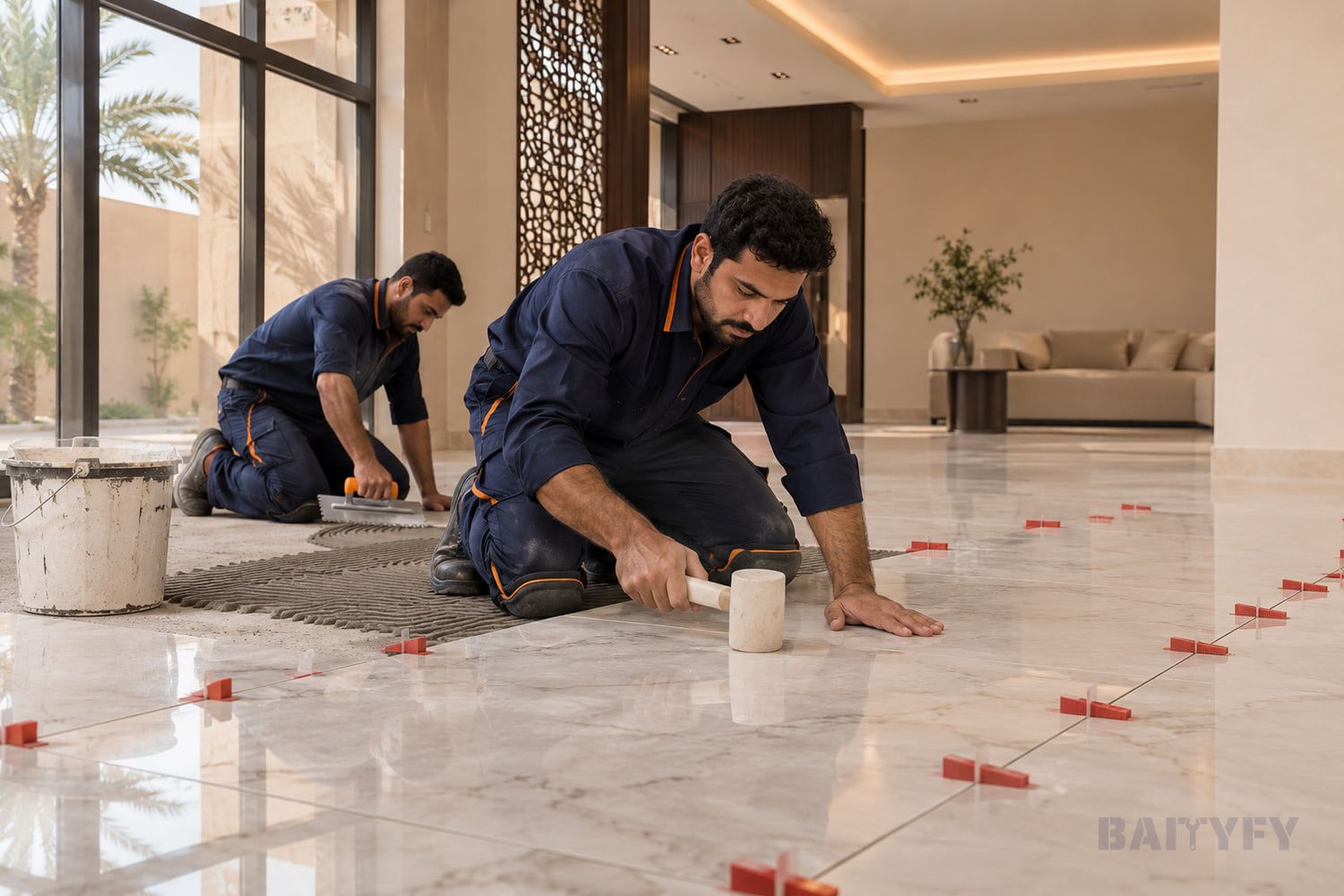
- Floors. Tiles, ceramic, porcelain or parquet.
- Painting. After the heavy work, so it doesn’t get dirty or scratched.
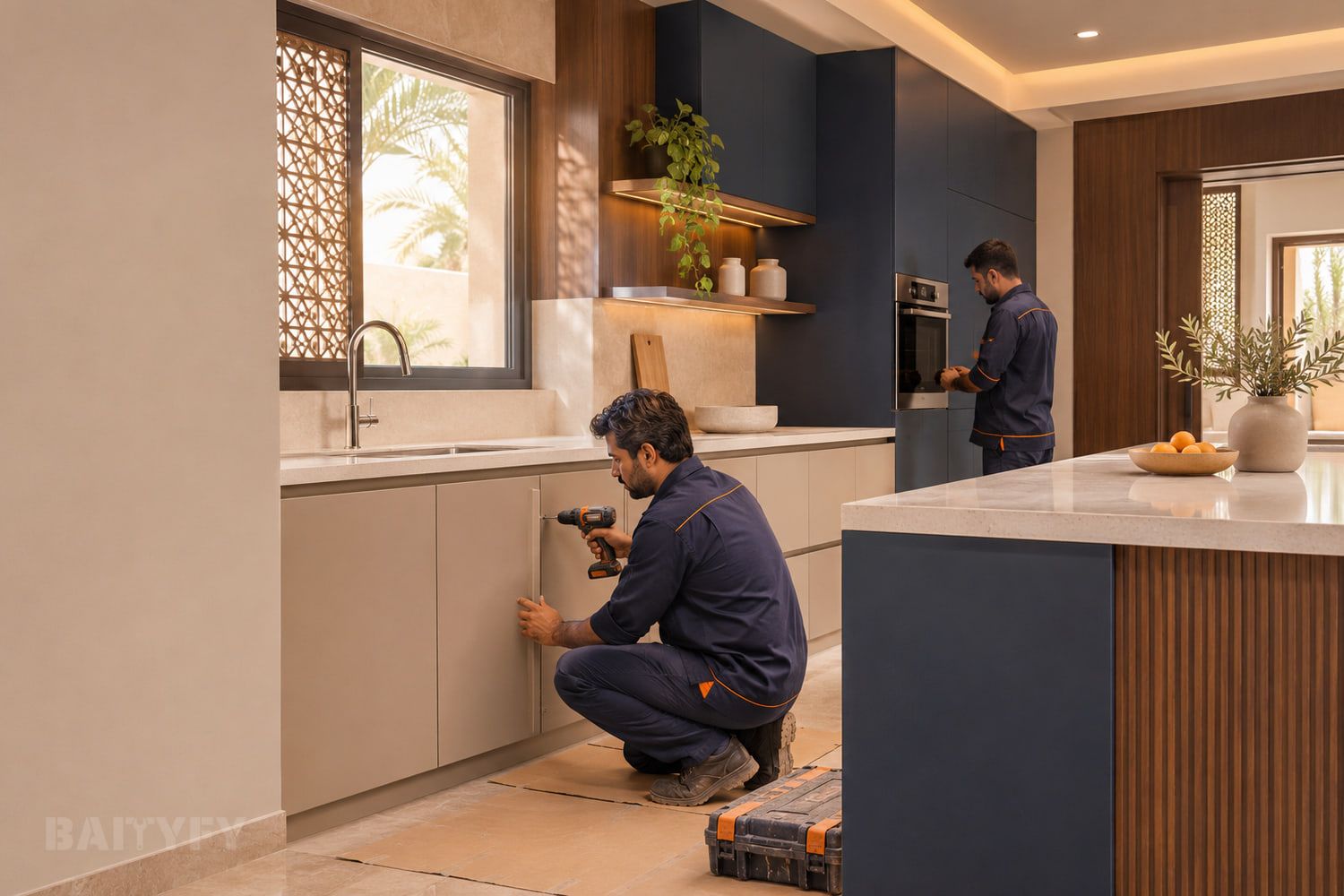
- Final fit-out. Taps, lights, sockets, doors and cabinets.
The classic mistake is painting before the electrics are done, then cutting into the wall to add a socket.
5. Choose materials that suit Riyadh
Heat, dust and hard water all affect what works well here:
- Bathrooms and kitchens. Moisture-resistant gypsum board, easy-clean tiles or porcelain, and grout that stands up to water.
- Floors. Porcelain is practical in high-traffic areas and copes well with dust. Parquet is warm and beautiful but needs more care.
- Paint. Choose washable paint for hallways and children’s rooms, because dust leaves its mark on walls.
- Kitchens. Heat-resistant worktops and moisture-resistant cabinets under the sink.
6. Plan how you’ll live during the work
Will you stay at home? For many jobs, like redoing one bathroom or repainting, you can, as long as the work is staged and the work area is sealed off. Bigger jobs, like new flooring across a whole floor or a kitchen renovation, need planning ahead.
Think about timing too: holidays, the school calendar and any family occasions coming up.
7. Get a clear scope before anything starts
Don’t start with anyone without a clear agreement on:
- Scope. Exactly what will be done, and what isn’t included.
- Materials. Types and specifications, and who supplies them.
- Timeline. The stages, and what happens in each.
- Payment. Tied to the stages of work, and in writing.
A bill of quantities (BOQ) helps a lot here. It lists the items and quantities, so you know exactly what the price includes.
8. Start with someone seeing the space
Photos help, but they aren’t enough to price renovation work. Real measurements, the condition of the walls and the state of the wiring and plumbing all need someone to see them in person.
That’s why at Baityfy we start with a free consultation visit anywhere in Riyadh. We inspect the space, take measurements, assess what’s there and listen to what you want. Afterwards you get a rough cost estimate and a clear timeline, and if you go ahead and settle the final scope, we prepare a BOQ for you. If you want help with the overall look first, our interior design service gives you a clear picture before anything is built.
The short version
Know your priorities, build a buffer into your budget, check plumbing and wiring before finishes, get the order of work right, and choose materials that suit Riyadh. And before you commit to anything, get an assessment from someone who has actually seen your home. Book your free visit and we’ll start there.