The most damaging leak is the one you can’t see. A dripping tap gets noticed on day one, but a pipe leaking inside a wall or under the floor can run for months before anything shows. All that time, water is being wasted, the bill is climbing, and damp is creeping into walls and foundations.
In Riyadh, most pipes run through walls, concrete and under tiles, so leaks are usually hidden. That’s why it pays to know the early signs.
Signs to watch for
Your water bill has gone up for no reason
If your usage hasn’t changed but the bill has jumped noticeably, that’s the first clue. Compare it with the same month last year if you can, since usage differs between summer and winter.
Stains or discolouration on walls or ceilings
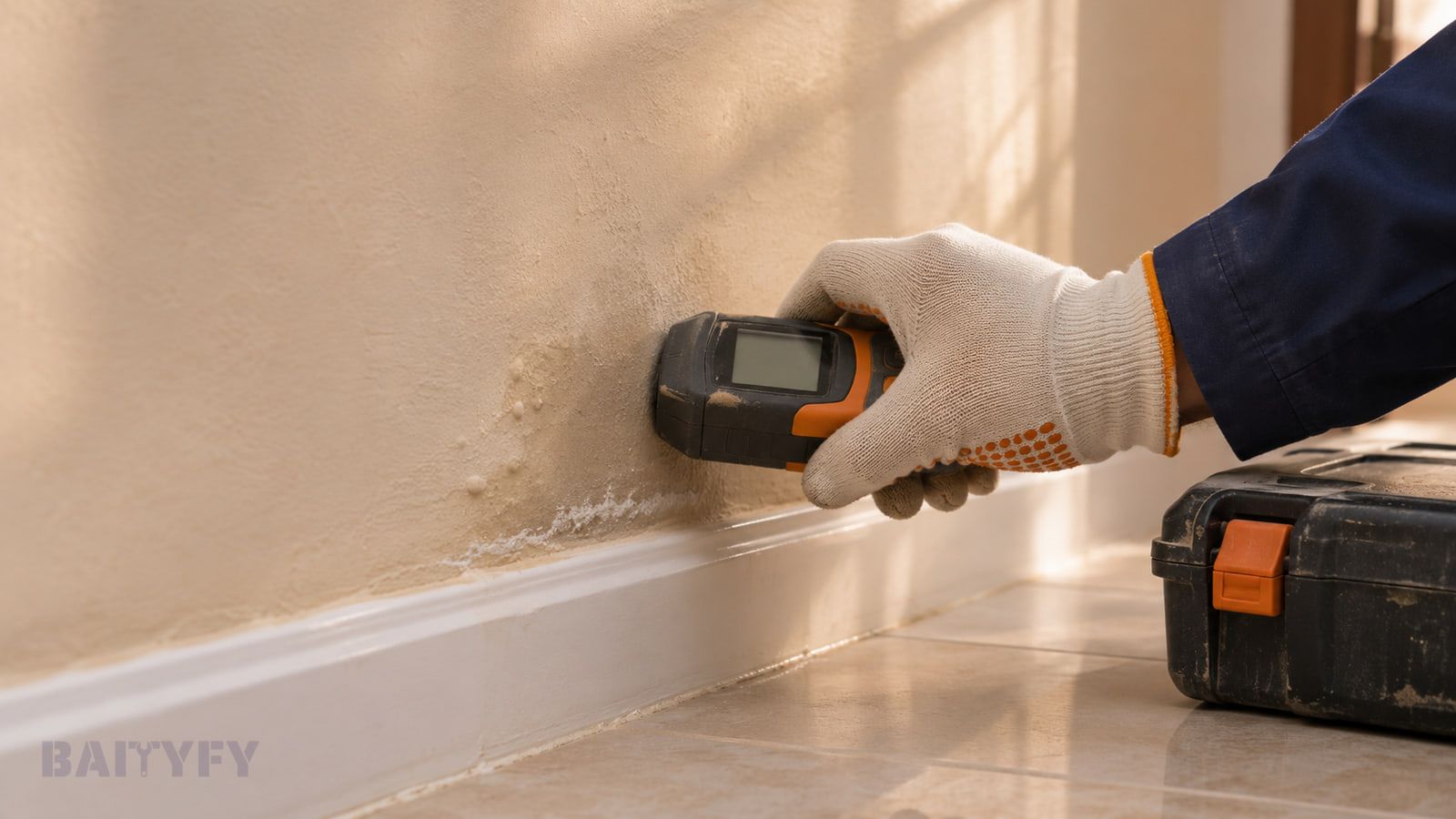
A yellow or brown patch, or a section of wall darker than the rest, especially near bathrooms and the kitchen, or below an upstairs bathroom. These patches often start small and grow slowly.
Peeling paint or swollen gypsum
Moisture makes paint lift away from the wall and bubble, and gypsum board soften and swell. If you see this somewhere without an obvious water source, the water is probably coming from inside.
Loose tiles or cracking grout
Tiles that sound hollow when you walk on them, or grout that cracks or darkens, can mean water is collecting under the floor.
A damp or musty smell
A heavy smell that doesn’t clear even with fresh air, especially inside cupboards or under sinks, suggests ongoing moisture somewhere.
Running water when everything’s off
At night, when the house is quiet, if you hear water running inside a wall or floor with every tap closed, that’s a strong sign.
The tank empties faster than usual
If you have a roof or ground tank and notice the pump running more than usual, or the tank emptying quickly without extra use, there may be a leak in the line between the tank and the house.
A warm spot on the floor
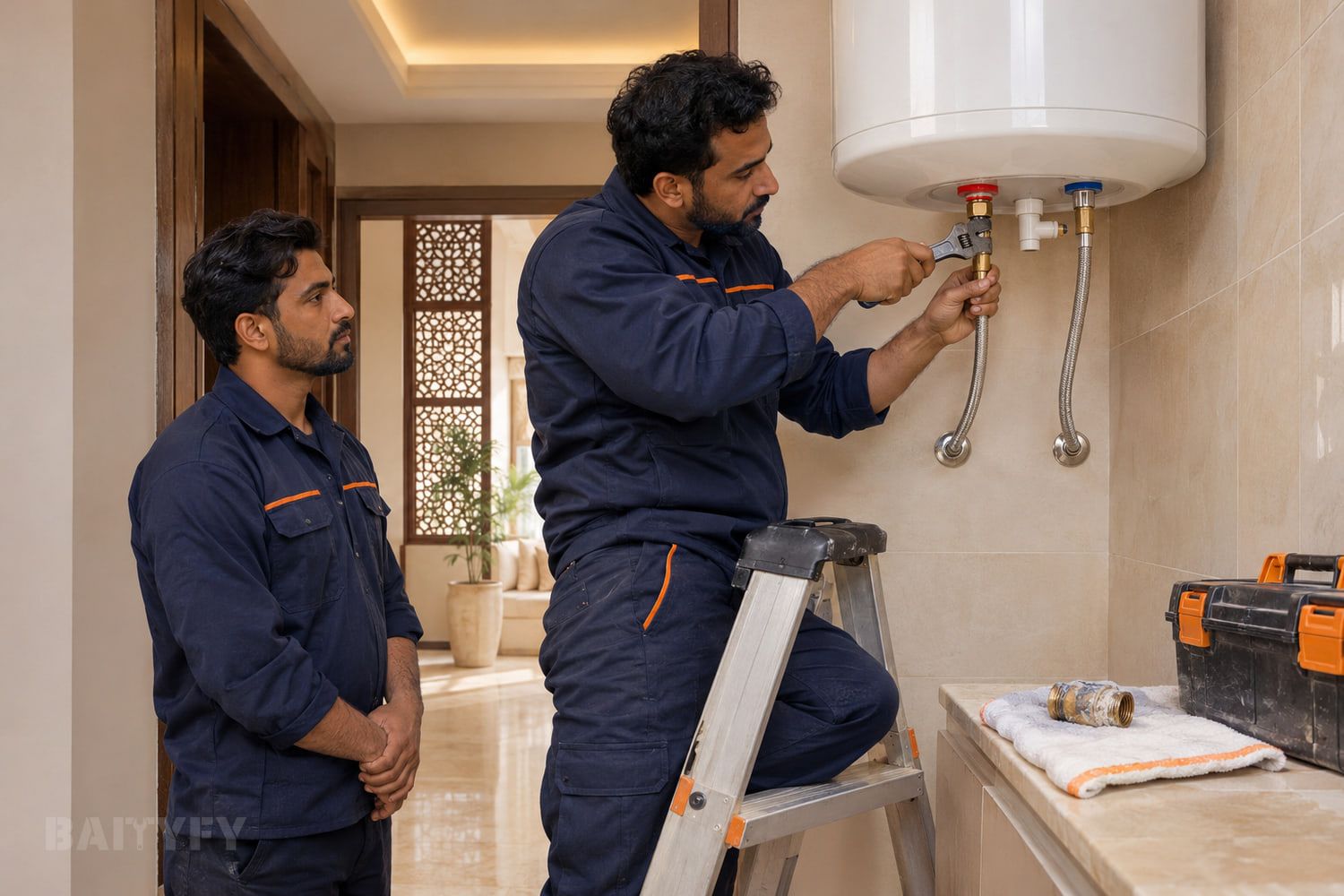
If one area of floor feels warmer than the rest, especially near a bathroom or kitchen, there may be a leak in the hot water line coming from your water heater.
The meter test: check it yourself
This is the simplest test there is, and you don’t need any tools:
- Turn off every tap in the house, and make sure the washing machine and water heaters aren’t filling.
- If you have a tank, close its inlet valve or make sure it’s full and the float isn’t drawing water.
- Go to the water meter and note the reading, or take a photo.
- Don’t use any water for an hour or two.
- Check the meter again. If the reading has changed, water is escaping somewhere.
You can narrow things down further by closing the valves for each bathroom one at a time and seeing when the meter stops.
Why you shouldn’t wait
A hidden leak doesn’t fix itself, and every day you wait means:
- Wasted water and higher bills.
- Damage to walls and ceilings. Paint, gypsum and insulation break down, and the repair bill grows.
- Mould and damp, which affect the air in your home.
- Long-term damage to foundations, if water is seeping under the house.
Older homes in Riyadh
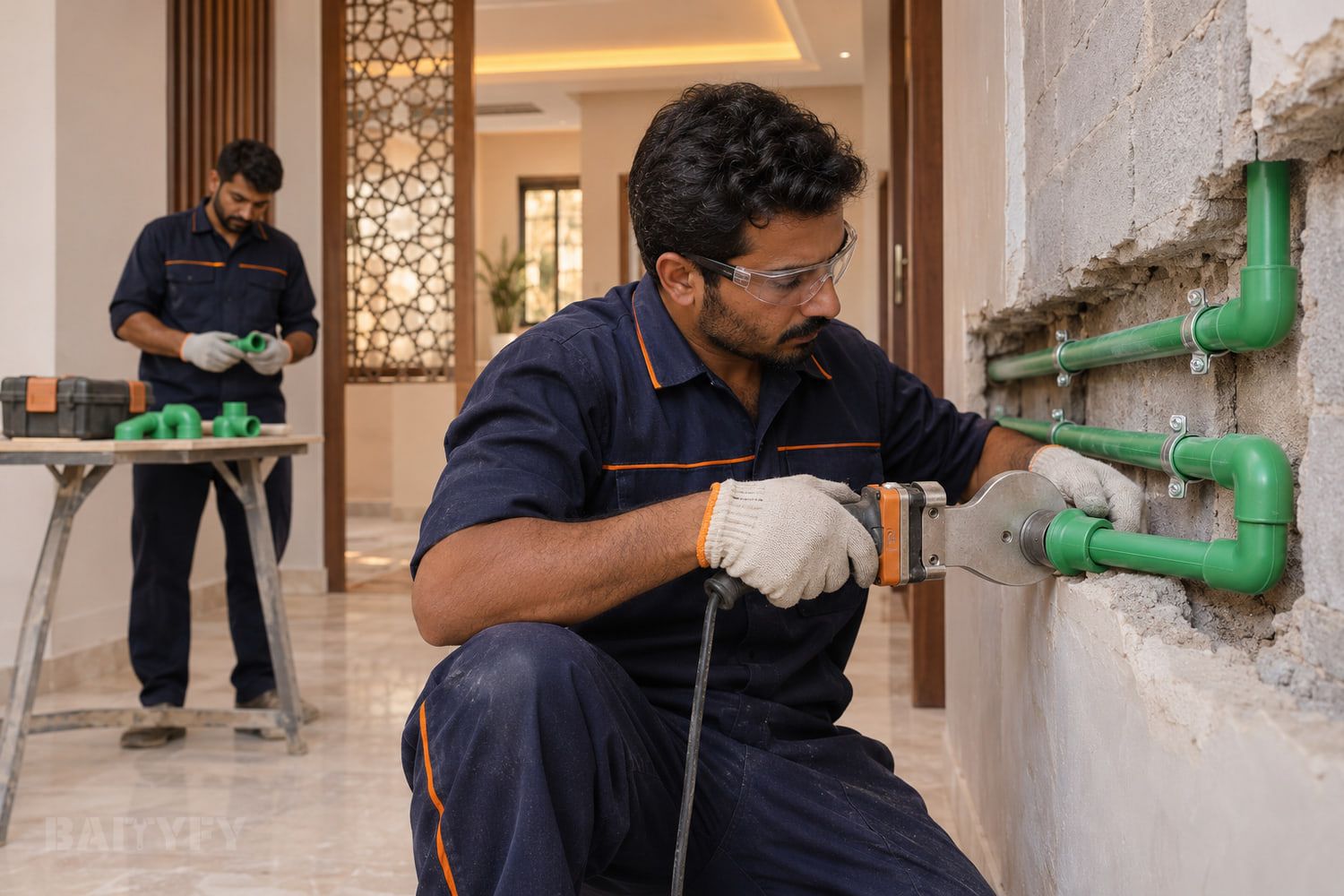
Many older homes, especially in central and southern Riyadh, have ageing pipes that have corroded from the inside, and hard water adds to the build-up. In these homes, leaks can keep popping up in different places, and the better answer is sometimes replacing the damaged section of pipe rather than patching it again and again.
How leak detection works
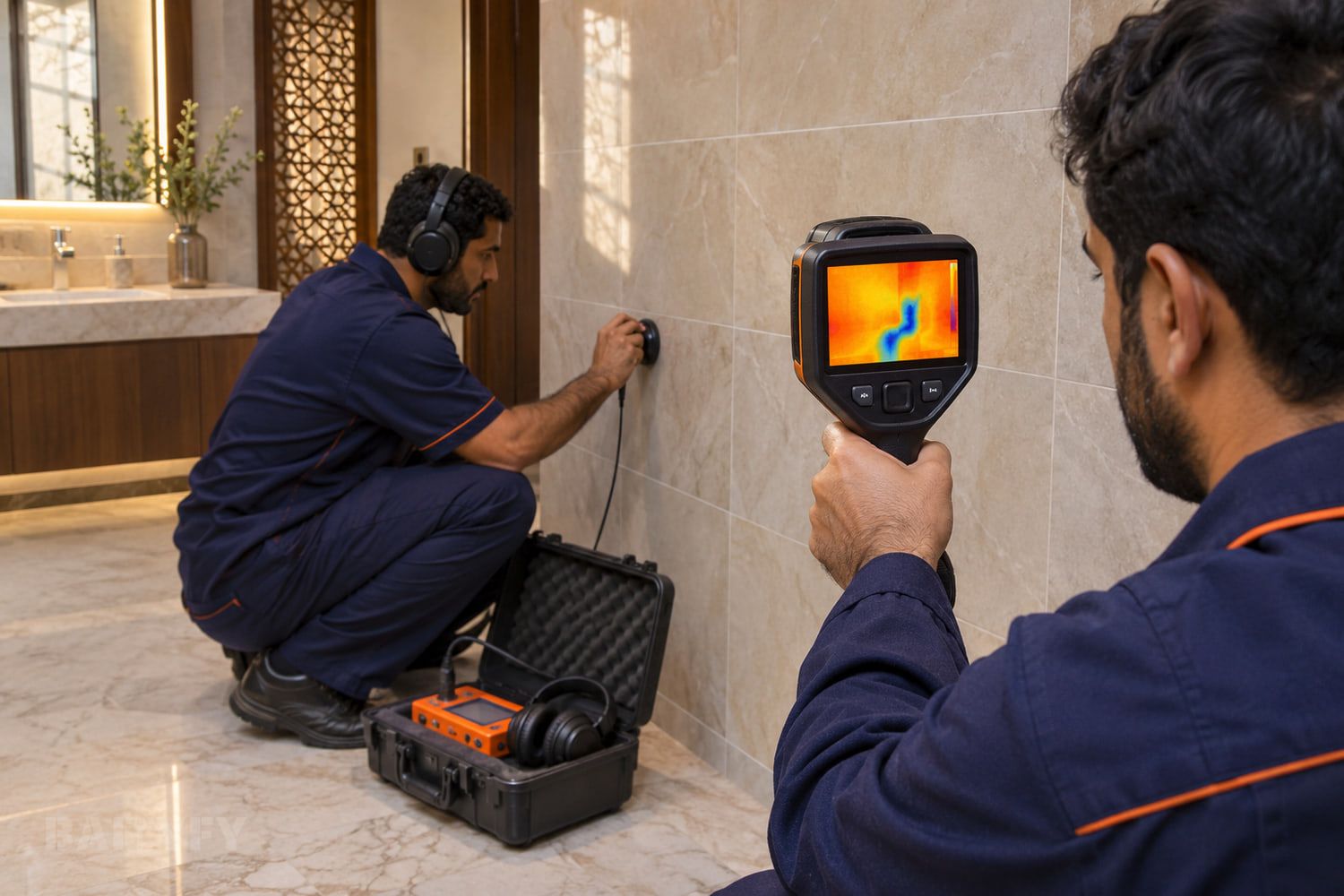
The goal of water leak detection is to find exactly where the leak is before breaking anything. Professional detection usually combines pressure-testing the lines with devices that pick up the sound of escaping water or measure moisture and temperature behind walls and tiles. The more precise the result, the smaller the opening and the faster the repair.
Once the leak is found, it’s repaired and the area is put back, whether that’s tiles, gypsum or paint. If an older bathroom has taken a lot of damage, it might be the right moment to think about a full bathroom renovation.
If the leak is serious right now
- Close the main water valve, or the valve for the affected bathroom or kitchen.
- Move electrical items and furniture away from the water.
- If water has reached sockets or wiring, switch off the main breaker if you can reach it safely.
- Take photos, then message us on WhatsApp and say it’s urgent.
The short version
If you notice any of the signs above, do the meter test. If the meter moves, don’t wait for the damage to spread. Send us photos of the stains or the meter reading on WhatsApp, or book a visit, and we’ll arrange a leak detection specialist with a clear price before work starts.