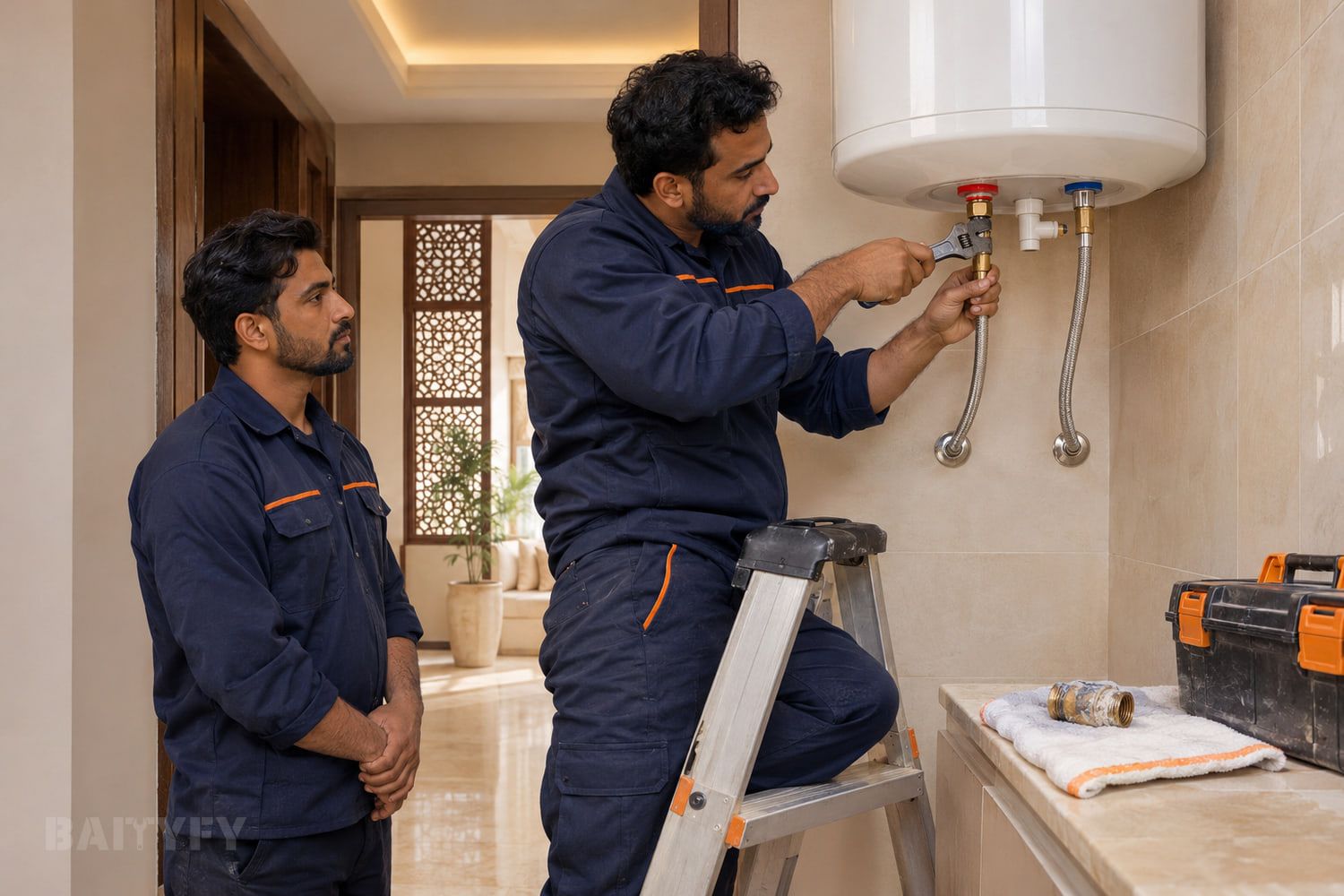
For most of the year in Riyadh, nobody thinks about the water heater. The cold tap runs warm enough on its own for months. Then December comes, nights fall to 6–9°C, and the first cold shower of the season tells you something has been wrong with the heater since last winter.
A few checks in November save you that surprise, and usually a bigger repair bill too.
Why heaters fail at the start of winter
A heater that sat almost idle all summer is suddenly asked to work hard every morning and evening. The water coming in is colder, so the element runs longer for every tank. Any weakness that stayed hidden in summer shows up in the first cold week: an element half covered in scale, a thermostat that sticks, a loose connection that heats up under load.
Riyadh’s water adds to this. It’s hard, so every time it’s heated it leaves a little limescale in the tank and on the element. Over a year or two that layer gets thick enough to slow heating, raise your electricity use and eventually burn out the element.
Checks you can do yourself
You don’t need tools for these, and none of them involve opening the heater.
Listen to it while it heats
Switch the heater on and stand near it for a few minutes. A quiet hum is normal. Popping, crackling or rumbling usually means a thick layer of scale at the bottom of the tank, with water trapped under it boiling in small bursts.
Look underneath and around the pipes
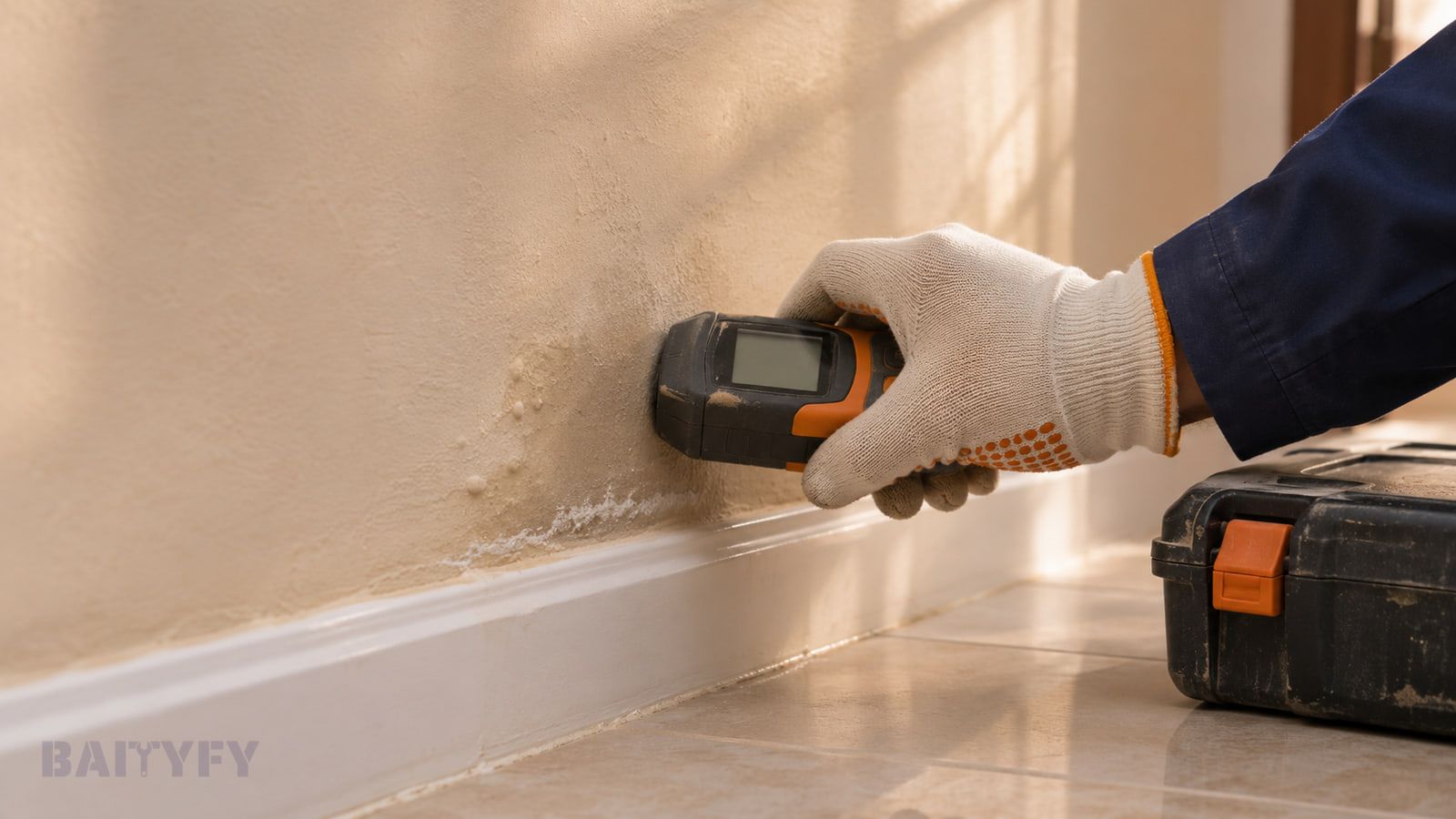
Check the floor and the wall under the heater, and the pipe joints going in and out. Dampness, rust marks or a white crust on the fittings are early signs of a slow leak.
Watch the safety valve
The safety valve (pressure and temperature relief valve) may let out a few drops while the tank heats. That’s its job. A constant drip or stream, though, means the valve has failed or the pressure is too high. Never block or remove it: it’s the part that stops the tank from becoming dangerous.
Time how long it takes
Note how long it takes from switching on until the water is properly hot, and how long a shower lasts before it turns lukewarm. If either is clearly worse than last winter, scale or a weak element is the likely reason.
Check the colour and smell of the hot water
Run hot water into a white basin. Brown or rusty water, or a smell like rotten eggs, points to corrosion inside the tank or a worn-out anode rod (the metal rod that protects the tank from rust).
Set the right temperature
The usual recommendation for a storage tank is around 60°C. Health bodies such as the WHO and the US CDC advise storing hot water at that level because bacteria like Legionella can grow in lukewarm tanks, especially ones that sit unused for long periods, as many do over a Riyadh summer.
The flip side is that water at 60°C can scald in a second or two. If you have young children or elderly family members:
- Ask for a thermostatic mixing valve on the outlet, which keeps the tank hot but delivers safer water at the tap.
- Turn the cold tap on first and the hot tap off first.
Turning the thermostat to maximum doesn’t give you more hot water. It mainly wastes electricity and wears the element faster.
Before you switch it on for the season
If the heater has been off for months:
- Make sure the tank is full of water before you switch the power on. Heating an empty tank burns out the element in minutes.
- Open a hot tap until water flows steadily without air spitting.
- Switch on and let the tank heat fully, then run the hot taps briefly to flush out water that sat in the pipes.
Descaling and the anode rod
Manufacturers generally recommend draining and flushing a tank heater about once a year, and more often in hard-water areas like Riyadh. The anode rod is usually checked at the same time and replaced when it’s mostly worn away, often every two to three years.
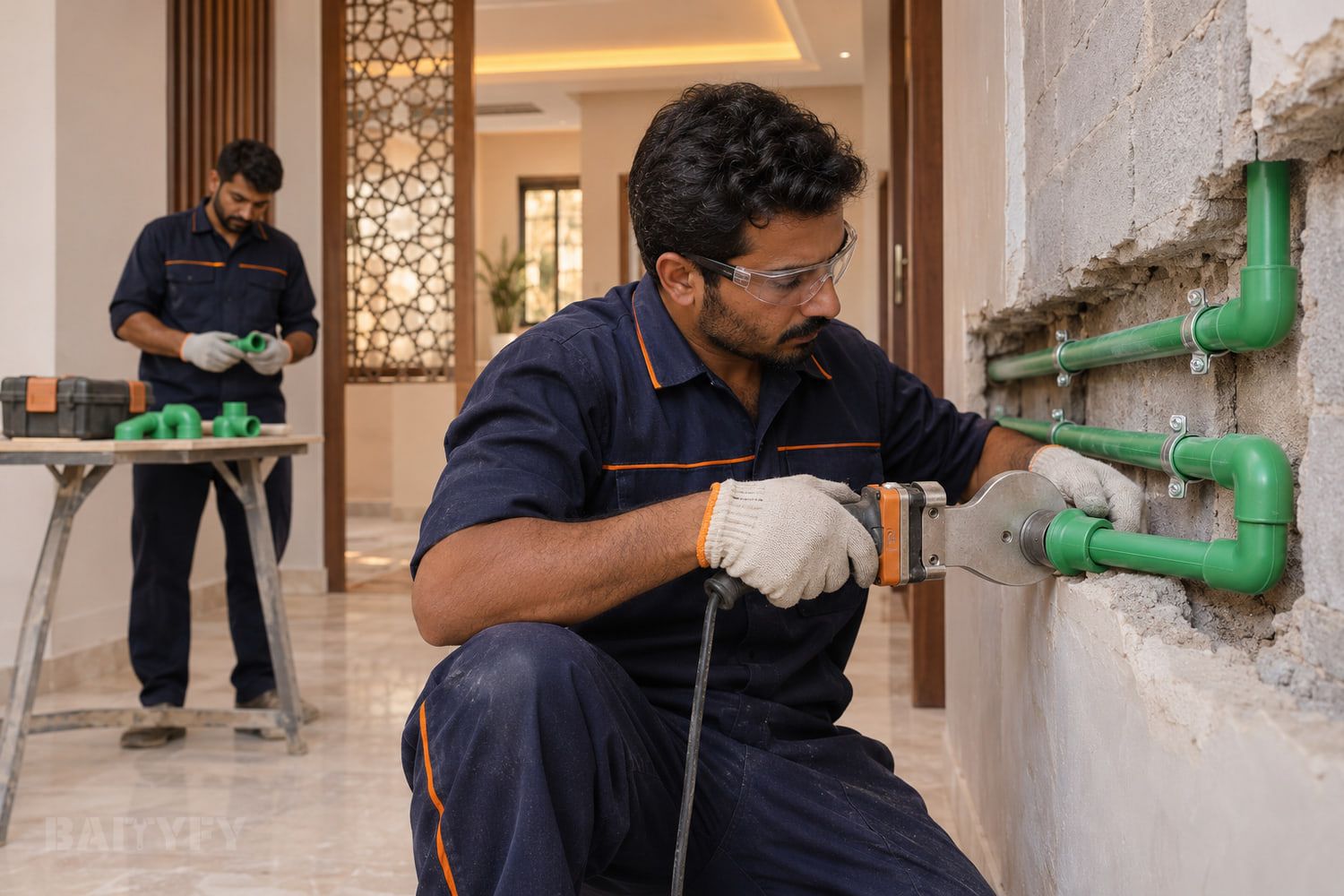
This job involves isolating the power, draining scalding water and dealing with fittings that may be stuck with scale, so it’s best done by a technician. Done before winter, it brings back heating speed and adds years to the heater’s life. It’s part of our water heater service.
Electrical safety
A water heater is one of the biggest electrical loads in the house. Call for help if:
- The heater trips the breaker when it switches on.
- The cable, plug or isolator switch feels warm or smells of burning.
- You see scorch marks around the socket or connection.
These are wiring problems, not plumbing ones, and they shouldn’t wait. An electrician can check the circuit, the breaker size and the earthing.
Repair or replace?
Usually worth repairing:
- No hot water, but the tank is sound: often the element or thermostat.
- A dripping safety valve or a leaking joint.
- Slow heating caused by scale.
Usually time to replace:
- Water leaking from the body of the tank itself, not a joint. Rust through the tank can’t be patched reliably.
- Rusty hot water even after the anode rod is changed.
- A heater over 10 years old that needs one repair after another.
If you’re replacing, it’s a good moment to think about size. A tank that suited two people may not keep up with a family of six, while an instant heater can make more sense for a kitchen or a guest bathroom that’s rarely used.
If there’s a hidden leak
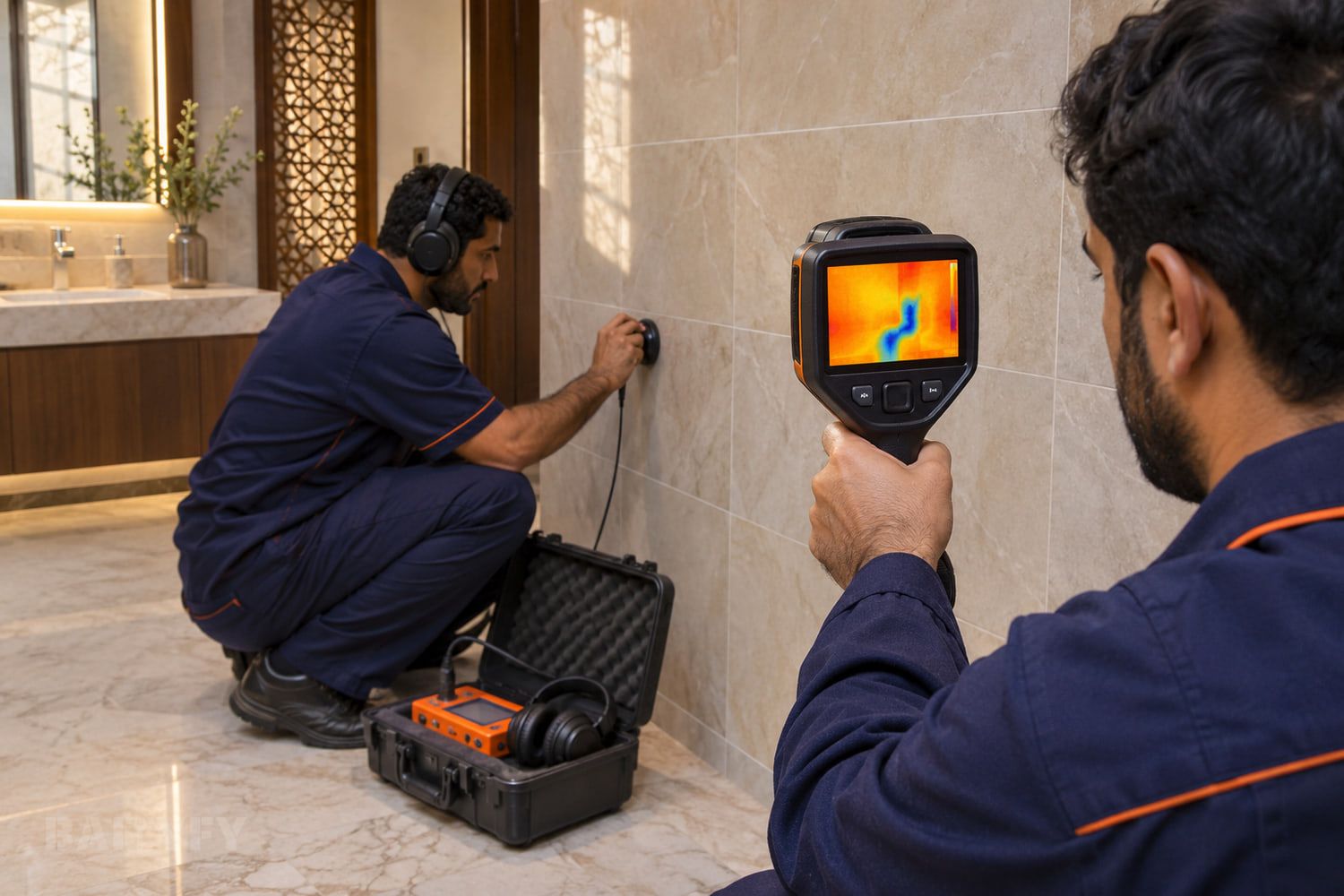
Damp patches on the wall behind the heater, or a warm spot on the floor near the bathroom, can mean the hot water line is leaking inside the wall. Our guide to the signs of a hidden water leak explains a simple meter test you can do yourself, and our leak detection team can find the exact spot before anything is broken open.
The short version
Listen, look, and time it. If your heater is noisy, dripping, slow or tripping the breaker, get it seen in November rather than on the coldest morning of January. Send us a photo of the heater and its label on WhatsApp, or book a visit, and we’ll tell you whether it needs a descale, a repair or a replacement, with a clear price before any work starts.